

Are Ticks Really Gone in Winter? What Homeowners Should Know
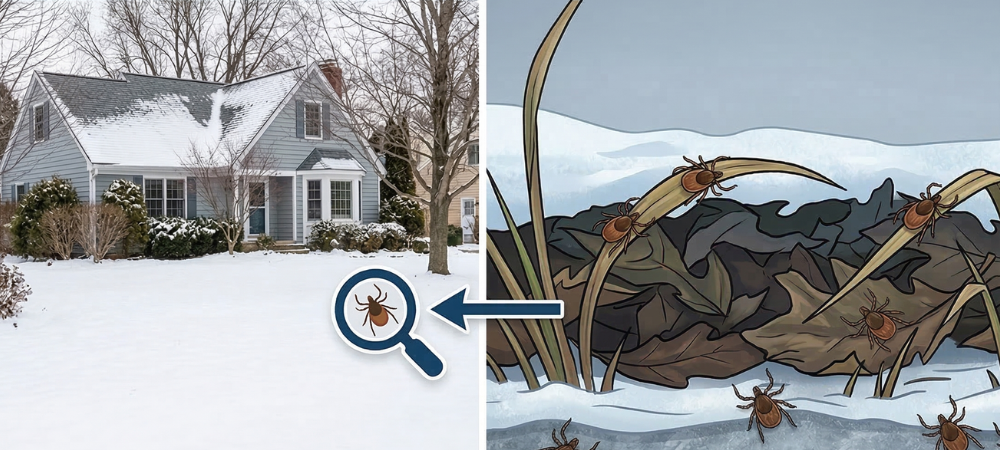
Most people assume ticks disappear when the snow falls. The ones that bite you in late November would suggest otherwise. Here's the truth about ticks in Western New York winters and why spring prevention starts now.
Fast Facts
- Blacklegged (deer) ticks remain active in New York whenever temperatures are above 35–40°F — which happens regularly throughout Western NY winters.
- Tick nymphs, the most common source of Lyme disease transmission, become active in early spring, making late winter the right time to prepare your yard.
- Simple yard modifications and professional barrier treatments applied before spring green-up can significantly reduce tick pressure around your home.
In our 26 years serving Western New York, we've had customers call us in January asking if a tick just bit them — and the answer is often yes. Unlike many insects, certain tick species in our region don't simply die off or go dormant when temperatures drop. Understanding which ticks are active and when is the first step toward protecting your family before peak season arrives.
Do Ticks Die in Winter?
Not all of them — and certainly not the ones you need to worry about most. There are two primary tick species in Western New York: the blacklegged tick (also called the deer tick, Ixodes scapularis) and the American dog tick (Dermacentor variabilis). Their winter behavior is very different.
Blacklegged ticks are cold-tolerant and remain active at temperatures as low as 35-40°F. They don't hibernate. On milder winter days — the kind Buffalo sees regularly from December through February — these ticks are actively questing for hosts in leaf litter, tall grass, and brush edges. According to the CDC, blacklegged ticks are responsible for the majority of Lyme disease cases in the Northeast, and their activity in New York is now considered a year-round public health concern.
American dog ticks are less cold-tolerant and are largely inactive from late fall through early spring. They become a concern again in April and May when they emerge in large numbers.
When Are Ticks Most Active in Western New York?
Think of tick risk in Western New York in three phases:
- Winter (December–February): Blacklegged adult ticks are active on mild days. These are large enough to be visible and are still capable of transmitting Lyme disease. Risk is lower than peak season but not zero.
- Spring (March–June): The highest-risk window. Blacklegged tick nymphs — tiny, poppy-seed-sized ticks — emerge and begin questing. Nymphs are responsible for a disproportionate share of Lyme disease cases because they're difficult to spot. American dog ticks also emerge in significant numbers through May and June.
- Summer and Fall (July–November): Nymph activity peaks in early summer, adult blacklegged ticks return in fall, and dog tick populations remain elevated through August.
The takeaway: late winter is the ideal time to start thinking about tick prevention because the spring surge happens faster than most homeowners expect. By the time you're mowing your lawn in April, tick nymphs are already active.
Warning Signs of High Tick Pressure in Your Yard
- Wooded areas or overgrown brush along the back edge of your property
- A history of deer, raccoons, or other wildlife passing through your yard
- Tall grass or leaf litter left unmanaged from fall
- Stone walls, woodpiles, or brush piles near the lawn edge (tick harborage sites)
- Finding ticks on pets after yard time, even in winter or early spring
- Living near wooded parks, nature trails, or forest edges common throughout Erie and Niagara counties
What Makes Western New York a Higher-Risk Area?
Blacklegged tick populations in New York have expanded significantly over the past two decades. The New York State Department of Health tracks Lyme disease as one of the most commonly reported vector-borne illnesses in the state, with Western New York counties seeing increased case counts alongside expanded tick habitat. The region's mix of suburban development, wooded backyards, and abundant deer populations creates ideal conditions for tick establishment and spread.
We've seen this shift firsthand. The frequency with which customers report tick encounters — including on residential properties that wouldn't have had significant pressure a decade ago — has increased noticeably. Suburban and semi-rural areas in Orchard Park, East Aurora, Lancaster, and Hamburg are no exception.
What Can Homeowners Do Now to Reduce Tick Activity Before Spring?
Late winter through early spring is the right window to take action. These steps reduce habitat and interrupt tick activity before the high-risk season:
- Clear leaf litter: Ticks overwinter in leaf piles. Raking and removing accumulated leaves before spring green-up removes both harborage and the moisture ticks need to survive.
- Mow low in early spring: Getting your first mow in early reduces the tall grass habitat ticks use to quest for hosts.
- Create a barrier zone: A 3-foot-wide layer of wood chips or gravel between lawn areas and wooded edges limits tick migration toward areas where your family spends time.
- Stack firewood off the ground: Elevated, covered woodpiles reduce the moist microhabitats that support tick survival.
- Remove wildlife attractants: Bird feeders near play areas, unsecured compost, and open pet food can attract deer and rodents — the primary tick hosts.
When to Consider Professional Tick Treatment
Yard modifications reduce tick habitat, but they don't eliminate established tick populations on their own. Our professional tick and mosquito control program uses targeted perimeter treatments that focus on the transition zones where ticks concentrate — lawn edges, brush borders, and shaded landscape beds. Treatments are timed to hit tick populations before the spring nymph surge, which is why scheduling in late winter or early March makes a real difference.
You and I both know how quickly an outdoor season in Western New York can feel like it disappeared. Getting your yard treated before the ground thaws means you're ready to enjoy it without watching every step you take.
At Eco Serve Pest Services, we also protect against mosquitoes as part of a seasonal outdoor pest program — because in WNY, the two threats often overlap. Our team services Buffalo, Orchard Park, Hamburg, Lancaster, East Aurora, and throughout Erie and Niagara counties.
Ready to get ahead of tick season this year? Contact us for a free quote and we'll recommend the right timing and treatment plan for your property.