

Boxelder Bugs and Other Pests You Might See Inside During Winter
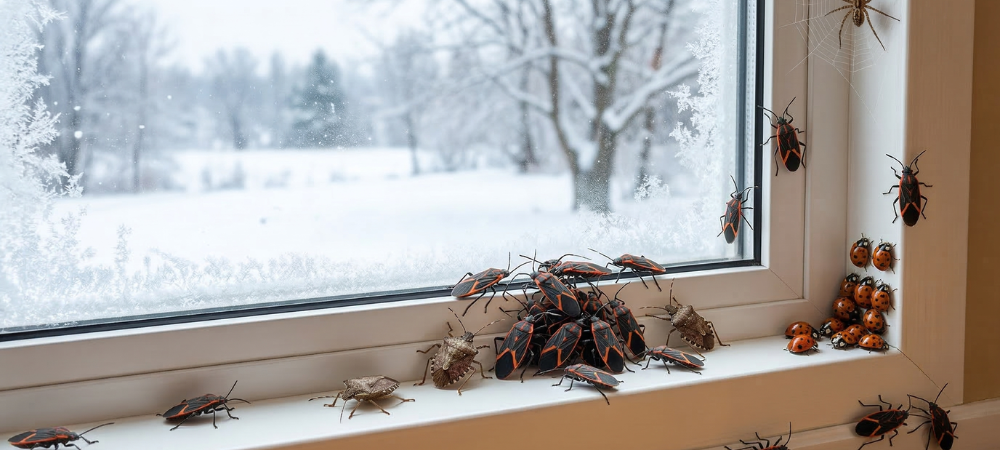
Those red-and-black beetles clustering on your south-facing wall weren't there yesterday. Now there are hundreds of them, and some have found their way inside. Here's what's actually going on.
What You Need to Know
- Boxelder bugs, stink bugs, and cluster flies don't infest your home. Rather, they overwinter inside walls and attics, becoming visible when indoor heat triggers activity.
- Late fall is when these pests push indoors. Once they're in, they can stay dormant through winter and resurface again in early spring.
- Sealing entry points before temperatures drop is the most effective prevention strategy, but there are removal steps for infestations already underway.
Every fall across Western New York, homeowners notice sudden clusters of insects on sunny exterior walls, around window frames, or crawling across ceilings inside. For most people, it comes out of nowhere. One day, there's nothing — the next, dozens or hundreds of insects are visible in and around the house. In our 26 years serving the Buffalo and Western NY area, we've fielded more calls about this exact situation than almost any other pest complaint in late October and November.
Why Do Boxelder Bugs Show Up Inside During Winter?
Boxelder bugs are overwintering insects, meaning they don't stay active outdoors through cold weather. Instead, they seek protected spaces to wait out the winter — and your home is exactly what they're looking for. These insects are drawn to warm, sun-warmed surfaces, which is why south- and west-facing walls are common gathering spots in fall.
Once inside, they squeeze into wall voids, attics, and insulated areas where they become dormant. The problem starts when indoor heating triggers partial activity. A warm sunny afternoon in January can cause them to move toward interior light sources, suddenly appearing on walls, windowsills, and furniture when homeowners least expect it.
Boxelder bugs are named for their primary host tree — the boxelder maple — though they also feed on silver maple and ash. According to the USDA Forest Service, boxelder bug populations tend to be higher in areas with abundant seed-bearing female boxelder trees, which are common throughout Western New York.
What Other Pests Overwinter Inside Homes?
Boxelder bugs aren't the only ones. Western New York homeowners dealing with winter pest activity may also encounter:
- Brown Marmorated Stink Bugs — These shield-shaped insects follow the same overwintering pattern. They release a foul odor when disturbed or crushed, which makes removal frustrating. Learn more about how to deal with stink bugs before reacting to a sudden sighting.
- Cluster Flies — Larger than houseflies and slow-moving, cluster flies congregate in attics and wall voids. They emerge on warm winter days and can appear in significant numbers near windows.
- Western Conifer Seed Bugs — Similar in appearance to stink bugs, these insects feed on conifer seeds and overwinter in structures. They're becoming more common in the Buffalo area.
- Asian Lady Beetles — Often confused with native ladybugs, these can bite mildly and leave yellow staining on surfaces.
None of these pests reproduce indoors, cause structural damage, or contaminate food. But large numbers of them inside a home are a clear signal of an entry-point problem that will worsen over time if not addressed.
What Triggers Indoor Activity in Winter?
In our experience, the most common question homeowners ask is why these pests suddenly appear mid-winter when they seemed to disappear in November. The answer comes down to temperature fluctuations. When overwintering insects are tucked into a wall void between your heated interior and cold exterior, a warm day causes thermal changes that disrupt their dormancy. They move toward warmth and light, which often means emerging into living spaces.
This is also why winter pest sightings tend to cluster around certain parts of the house, such as south-facing rooms, attic access points, and areas near HVAC equipment. The pattern follows the heat gradient inside your walls.
Warning Signs of an Overwintering Pest Problem
- Large clusters of insects on exterior walls in the fall, especially on sunny sides of the house
- Insects appearing on interior windowsills or near light fixtures during warm winter days
- Faint odor inside walls or in attic spaces (stink bugs)
- Finding dead insects in window tracks or on sills throughout winter and early spring
- Sudden reappearance of insects in March and April as they exit overwintering sites
- Small gaps or cracks visible around window frames, utility penetrations, or soffits
How to Prevent Boxelder Bugs and Stink Bugs From Getting Inside
The best time to act is late summer to early fall, before these insects begin seeking shelter. But exclusion work done in winter or spring still reduces future entry. Here's what works:
- Seal entry points: Caulk around window and door frames, exterior utility penetrations, and any gaps where siding meets foundation or trim. Pay attention to areas where different building materials meet — these gaps are common entry routes.
- Install or repair door sweeps and weatherstripping: Even small gaps under exterior doors are enough for these insects to squeeze through.
- Inspect attic vents and soffits: Screen or seal damaged vents. These are primary entry points for cluster flies and boxelder bugs.
- Avoid crushing stink bugs: The odor released can attract others. Use a vacuum or damp cloth to remove them without triggering the scent gland.
- Exterior treatment in fall: Perimeter insecticide treatments applied in September and October, before insects begin gathering, are the most effective preventive measure for high-pressure infestations.
Research from UC Cooperative Extension confirms that exclusion — not reactive chemical treatment — is the most reliable long-term control method for overwintering insects in residential structures.
When DIY Removal Falls Short
If these insects are already inside in significant numbers, vacuum removal and sealing visible gaps is a reasonable first step. The challenge is that the majority of overwintering insects are often tucked into inaccessible wall voids, attic insulation, or behind siding where no amount of interior vacuuming will reach them. What's more, treating inside the walls with pesticide during winter can cause dead insects to attract secondary pests.
What we've found is that the most effective approach for a significant overwintering infestation involves a professional perimeter inspection to identify entry points, followed by exterior barrier treatment in the appropriate season. This addresses the source rather than chasing insects that have already made it inside.
Professional Pest Control for Overwintering Insects in Western New York
Our team has spent 26 years helping Western New York homeowners deal with seasonal pest activity. Whether you're seeing boxelder bugs, stink bugs, or cluster flies, we can identify your entry points, apply targeted exterior treatments, and help you seal your home against next season's pressure. Our residential pest control programs include follow-up services at no extra cost if pests return during your warranty period.
You shouldn't have to share your living room with bugs that have been hiding in your walls all winter. Call us or request a free quote, and we'll take it from there.