

Cluster Flies vs. House Flies: Why Are Large Flies Appearing Near Your Windows?
Bottom Line Up Front
Large, sluggish flies gathering near upper-floor or sunny windows in fall, winter, or early spring are often cluster flies, not ordinary house flies. Cluster flies enter buildings to overwinter and later move toward light as temperatures shift. House flies are usually faster, more active around food and waste, and connected to a moist organic breeding source. The right response depends on identifying which pattern you are seeing.
TL;DR — Key Takeaways
- Cluster flies are usually larger, slower, and dull gray, often with short golden hairs on the thorax.
- They develop outdoors in association with earthworms and do not breed inside homes.
- Sunny windows are often where overwintering flies become visible, not where the problem began.
- House flies are generally quicker and more strongly associated with garbage, animal waste, or other moist decaying material.
- Vacuuming helps with flies already indoors, but fall exclusion and properly timed exterior prevention address recurring cluster fly activity.
Why Are Large Flies Suddenly Showing Up at the Window?
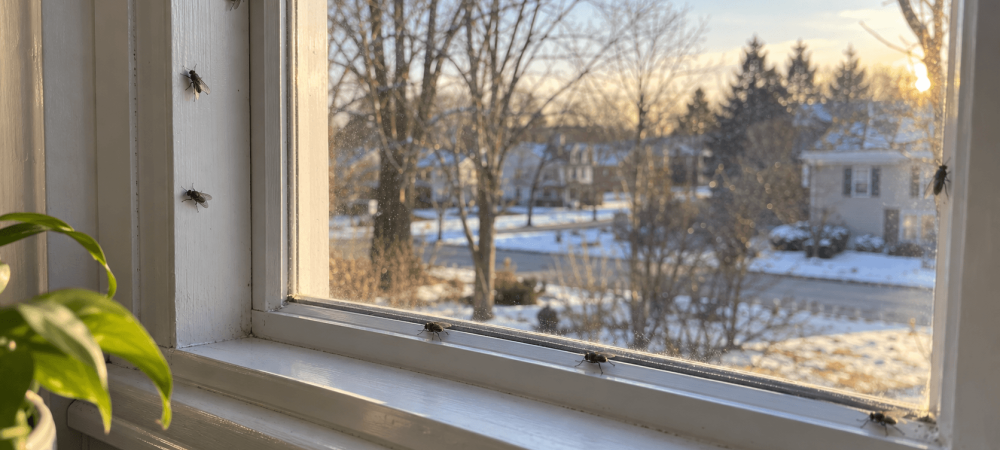
When a large gray fly appears against a bright window in the middle of a Western New York cold spell, it can seem as though it came from nowhere. Often, it has been inside the structure for weeks or months. Cluster flies commonly enter protected spaces such as wall voids, attics, soffits, and gaps around upper windows before winter.
A sunny afternoon, indoor heat, or changing temperatures can wake some of them from their resting state. They move toward daylight and end up at windows. This same seasonal behavior is shared by several overwintering pests that may appear inside during winter, including boxelder bugs and stink bugs.
The window is therefore a clue, but it is not proof by itself. Both cluster flies and house flies may be drawn to light. To tell them apart, look at the full pattern: appearance, movement, season, location, and what else is happening nearby.
Cluster Fly vs. House Fly: The Quick Comparison
These flies can look similar from a distance, but their behavior and breeding biology are very different.
| Feature | Cluster Fly | House Fly |
|---|---|---|
| Typical appearance | Robust, dull gray or brownish-gray; short yellowish or golden hairs may be visible on the thorax | Gray; four narrow dark stripes are usually visible on the thorax |
| Movement | Often slow, clumsy, or sluggish, especially after emerging indoors | Usually quick and active |
| Common indoor pattern | Groups near sunny windows, attics, upper rooms, or light fixtures during fall through spring | Activity near kitchens, garbage, pet waste, food areas, or other breeding sources |
| Where larvae develop | Outdoors in soil; larvae parasitize earthworms | Moist decaying organic material, including garbage and animal waste |
| Do they reproduce indoors? | No. Buildings are used as overwintering shelter | They can if a suitable indoor breeding source is present |
| Main concern | Seasonal nuisance and repeated entry through exterior gaps | Sanitation concern and possible contamination of food or surfaces |
Table 1. Comparison of cluster flies and house flies by appearance, behavior, breeding source, and typical indoor activity.
The most useful distinction is not size alone. A cluster of slow flies at an upstairs window on a warm February afternoon points in a different direction than fast-moving flies repeatedly appearing around a kitchen trash area in July.
What Do Cluster Flies Look Like?
Adult cluster flies are robust flies measuring about 0.3 inch long. Their overall color is brownish-gray, their abdomen may look checkered, and short yellow hairs on the thorax can create a slightly golden appearance. When resting, their wings overlap over the abdomen.
Indoors, behavior may be easier to notice than fine markings. Cluster flies tend to fly slowly, buzz loudly, and may spin on a windowsill or floor when weak. They often collect together, which is how they got their common name.
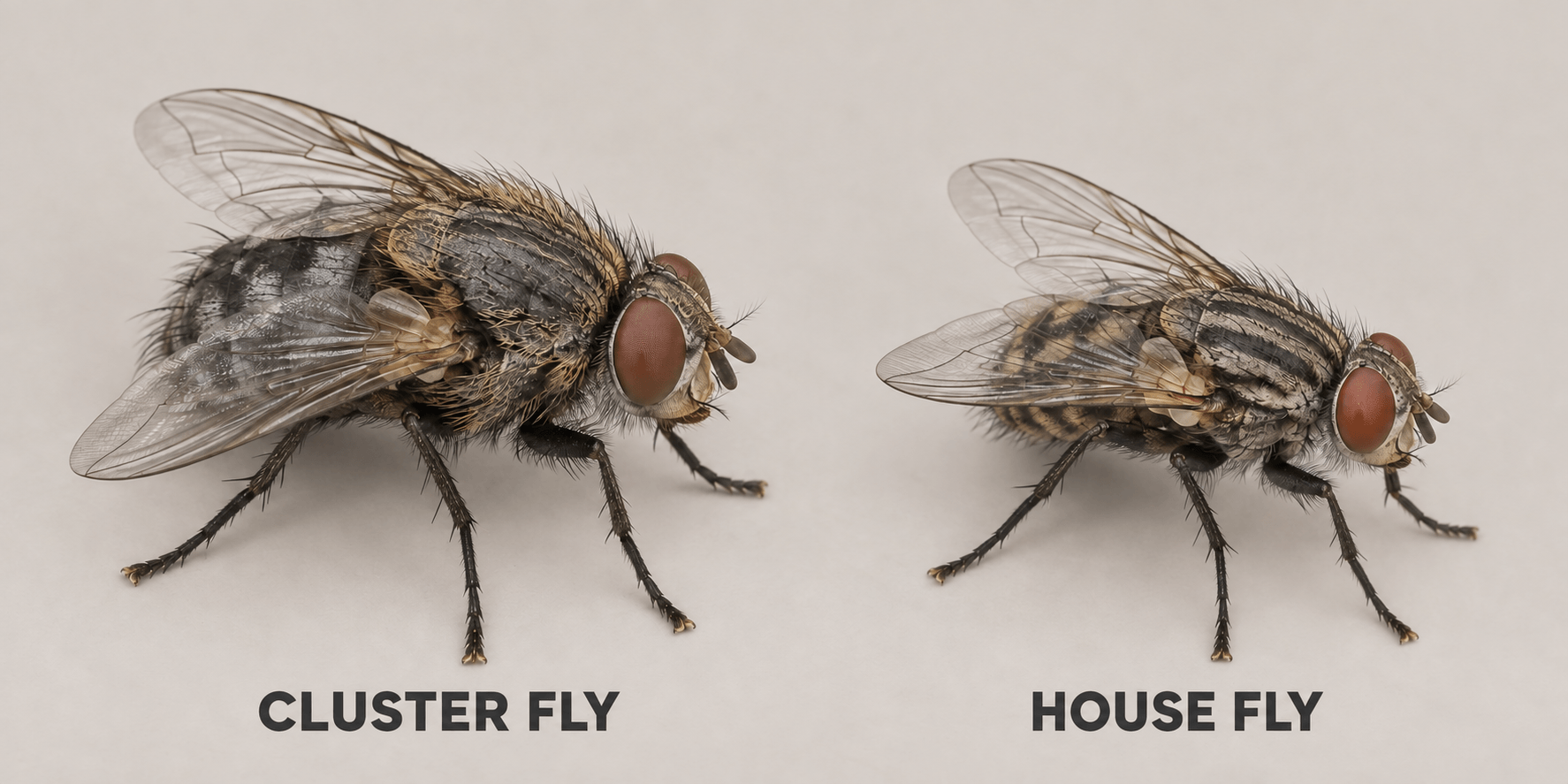
Image 1: Cluster flies are typically more robust and sluggish, while house flies show four dark stripes on the thorax and move more quickly.
Why Cluster Flies Gather Near Windows
They are moving toward light
After emerging from an attic or wall void, cluster flies often orient toward the brightest part of the room. That makes a sunny window a natural gathering point, especially in upper stories where the flies may have overwintered nearby.
Temperature changes can activate them
A bright winter day can warm one wall or attic area even while outdoor temperatures remain cold. In Western New York, repeated warmups and cold snaps may lead to scattered indoor appearances rather than one single event.
They may have entered months earlier
Seeing flies in January does not necessarily mean they entered that week. Adults often gather on sun-warmed exterior walls in fall, then slip through gaps around soffits, vents, siding, fascia, windows, and utility openings. This broader seasonal pattern is explained in Eco Serve's guide to why winter pests may still appear indoors.
Do Cluster Flies Mean Something Is Dead in the Wall?
Usually, no. This is a common concern because blow flies and other large flies can be associated with animal remains. Cluster flies have a different life cycle. Females lay eggs outdoors in soil near earthworm burrows, and the larvae develop as parasites of earthworms. The adults later seek shelter in buildings for winter.
If flies appear suddenly in very large numbers, have metallic blue or green coloring, or are accompanied by a strong odor, the identification may be different. A dead animal, plumbing issue, or another organic source could be involved. That is a good reason to have the fly identified rather than assuming every large fly at a window is a cluster fly.
Why House Flies Need a Different Response
House flies are not simply a smaller version of cluster flies. They develop in moist decaying organic material, including garbage and animal waste. Because adults move between these materials, food, and surfaces, the control plan should focus first on locating and removing the breeding source.
Check indoor and outdoor trash containers, spilled food, recycling residue, pet waste, compost, and other moist organic buildup. Repair screens and reduce opportunities for adult flies to enter, but do not rely on sealing alone if new house flies keep emerging. Persistent activity may indicate a breeding source that has not yet been found.
What To Do When Flies Are Already Inside
- Vacuum visible flies from windows, tracks, floors, and light fixtures. Empty the contents into a sealed bag or outdoor trash container.
- Avoid crushing cluster flies on walls, curtains, or trim because they can leave a greasy mark.
- Use well-fitted screens and keep windows closed when exterior fly activity is heavy.
- For suspected house flies, clean potential breeding material and keep trash tightly covered.
- Record where and when flies appear. Upper-story winter activity suggests a different source than repeated summer activity around food or waste.
Indoor removal manages the flies you can see. It does not reach cluster flies already resting in inaccessible voids, and it will not correct the source of an active house fly breeding problem.
How To Help Prevent Cluster Flies Before Fall
Prevention is most effective before adults begin settling into buildings. Inspect the exterior in late summer and early fall, with extra attention to upper areas that are easy to overlook.
- Repair damaged window and door screens.
- Seal appropriate gaps around window and door frames, utility penetrations, siding transitions, fascia, and trim.
- Screen attic and roof vents without blocking required ventilation.
- Check soffits, flashing, and roofline transitions for openings.
- Replace worn weatherstripping and make sure attic access doors fit tightly.
Eco Serve's brown marmorated stink bug guide describes a similar fall shelter-seeking pattern and offers more context on why exterior entry points matter for overwintering pests.
When Professional Fly Identification Helps
Consider professional help when flies return year after year, appear in large numbers, are emerging from several rooms, or do not fit a clear seasonal pattern. Correct identification matters because cluster flies, house flies, blow flies, and other large flies point to different sources and different solutions.
Eco Serve Pest Services can inspect the activity pattern and likely entry areas, identify the type of fly, and recommend a strategy based on the home and the season. If you are already an Eco Serve customer on the Premium Plus plan, cluster flies are included, and minor entry-point sealing may be completed where appropriate to help address likely access areas. Some repairs may still require a qualified contractor depending on the opening and building material.
Large Flies at the Window? Start With the Pattern
A few details can turn a frustrating mystery into a much clearer pest question. Slow, dull-gray flies appearing at sunny upper windows during cool weather often indicate cluster flies that entered earlier to overwinter. Faster flies near food, garbage, or waste are more consistent with house fly activity and call for a source-focused sanitation approach.
If you are unsure what is gathering near your windows, contact Eco Serve for help identifying the fly and deciding what to do next. Call or text 716-536-5806 or request a free quote online. Pest Control That's Personal.
Frequently Asked Questions
For more seasonal context, read Boxelder Bugs and Other Pests You Might See Inside During Winter.