
Common Signs of a Rat Problem in Buffalo Businesses and Commercial Facilities
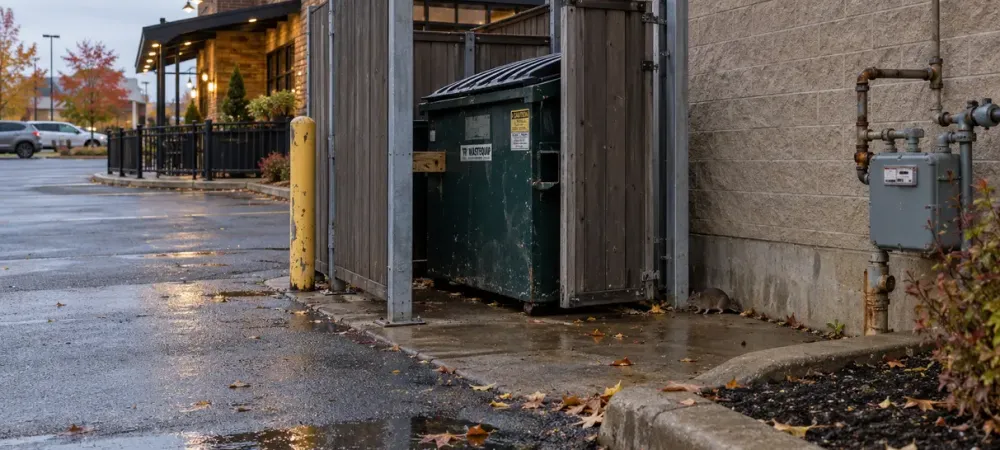
A rat problem in a Buffalo business often shows itself before anyone sees a live rat. Common warning signs include droppings, gnaw marks, greasy rub marks, burrows, tracks, damaged packaging, unusual odors, scratching noises, and repeated activity near dumpsters, loading docks, utility penetrations, or storage areas. Regular inspection matters because the CDC notes that rodent signs often appear before an actual sighting. For commercial properties, early detection can also help reduce contamination concerns, property damage, operational disruption, and the chance that a small issue becomes established.
- Droppings and fresh gnaw marks are two of the clearest early indicators of rodent activity.
- Grease marks, runways, tracks, and burrows can reveal where rats repeatedly travel or nest.
- Commercial risk areas often include dumpsters, receiving doors, storage rooms, utility penetrations, kitchens, break rooms, mechanical spaces, and areas beneath equipment.
- Food, water, shelter, and accessible openings make a facility more attractive to rats. Correcting these conditions is an important part of prevention.
- Rodent waste should be cleaned carefully. CDC guidance says not to sweep or vacuum dry droppings or urine before disinfection.
- A commercial rodent-control plan should look beyond the individual rat and address activity patterns, entry points, sanitation, harborage, and ongoing monitoring.
Why Rat Activity Matters More in a Commercial Setting
A rat in a home is a problem. A rat in a business can affect far more than one room. Depending on the facility, rodent activity can intersect with stored products, food handling, employee areas, customer spaces, equipment, inventory, building systems, and the reputation of the operation. Cornell Integrated Pest Management notes that rodents can contaminate food, damage structures, chew wiring, and carry pathogens linked to human illness.
For food-service and retail food operations, pest exclusion is also built into food-safety guidance. The FDA Food Code is a model code used by regulatory jurisdictions, and its physical-facility provisions address protecting outer openings against insect and rodent entry. The exact rules that apply to a specific Buffalo-area facility depend on the operation and governing authority, but the practical takeaway is straightforward: doors, gaps, sanitation, and pest monitoring deserve routine attention.
Eco Serve Pest Services provides commercial pest control in Western New York for restaurants, food-processing facilities, warehouses, offices, schools and universities, assisted-living facilities, apartments and condominiums, and other commercial properties.
1. Rat Droppings in Storage, Food, Utility, or Service Areas
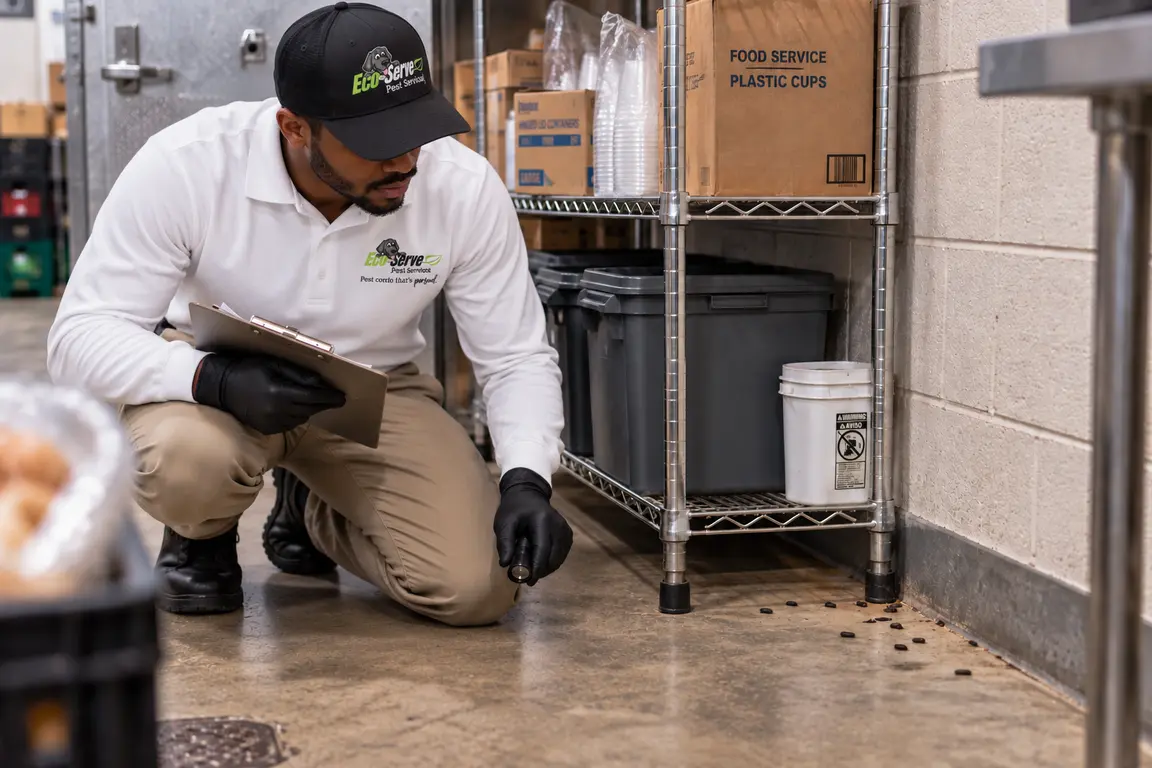
Droppings are one of the most useful clues because they show where rodents have had access. The CDC identifies droppings as a common sign of rodent presence and notes that fresh activity can be assessed by safely cleaning an area and watching for new droppings afterward.
In a commercial building, check quiet edges and protected spaces rather than only open floor areas. Potential locations include behind shelving, beneath sinks, around utility rooms, inside storage areas, near floor-wall junctions, behind equipment, around loading areas, and near food or waste storage.
2. Fresh Gnaw Marks and Damaged Packaging
Rats gnaw regularly, and fresh chewing can show up on packaging, wood, plastic, door materials, utility areas, or other surfaces. Cornell IPM describes rat gnaw marks as wider than mouse gnaw marks and notes that rodents may chew materials to reach food, water, shelter, or an opening.
In warehouses, restaurants, break rooms, retail stockrooms, and food-processing environments, pay particular attention to damaged bags, cartons, bulk ingredients, pet food, seed, dry goods, or packaging stored near walls. Chewed door sweeps or enlarged openings around pipes can also point to repeated access.
3. Greasy Rub Marks and Established Runways
Rats tend to use familiar travel routes. Over time, repeated contact with walls, pipes, ledges, or openings can leave dark, greasy smudges. A single dark mark is not enough to identify a rat problem by itself, but rub marks combined with droppings, tracks, gnawing, or burrows can strengthen the evidence.
A CDC urban rodent survey guide lists runways, rub marks, droppings, burrows, gnaw marks, tracks, and sightings among active rodent signs used during inspections.
4. Burrows Near Foundations, Dumpster Pads, Landscaping, or Slabs
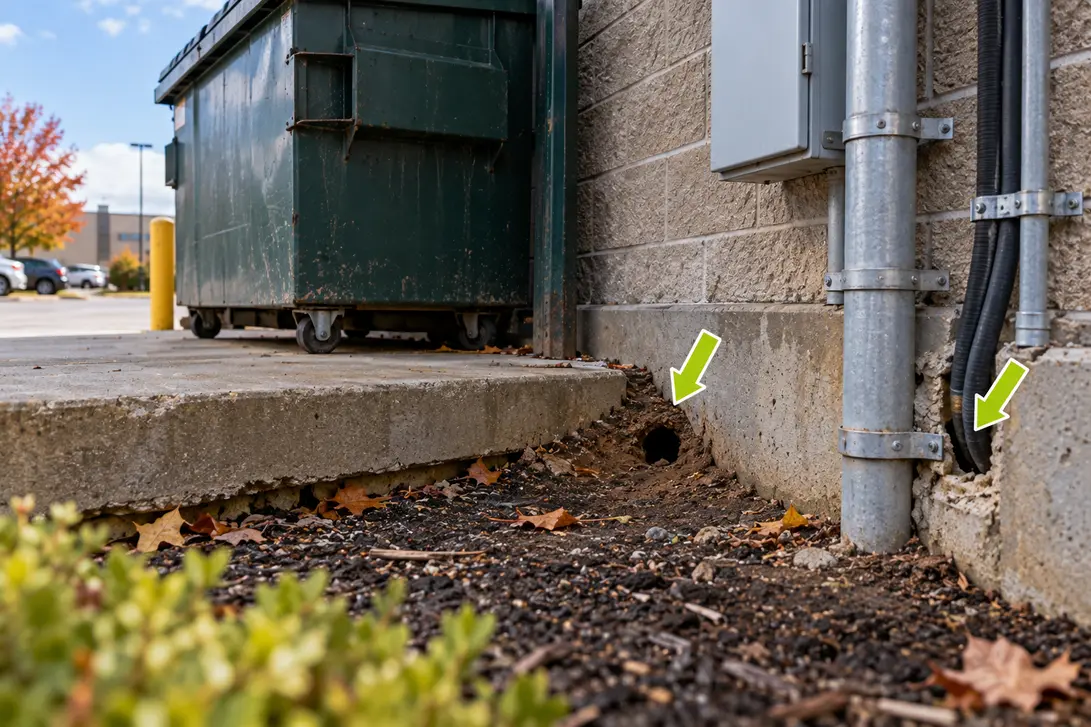
Norway rats commonly burrow at ground level. Around a commercial property, burrows may appear along foundations, beneath concrete edges, near dumpster pads, in embankments, under dense vegetation, or beside areas that provide food and cover. An active-looking opening may have smooth edges, fresh soil, or a clear travel path nearby.
Eco Serve’s rodent control service information notes that Norway rats are common in Western New York and often use burrows outdoors before entering structures. Commercial teams should pay close attention to the transition between exterior activity and possible building entry points.
5. Tracks, Tail Marks, or Dust Disturbance
In dusty mechanical rooms, warehouses, storage spaces, or rarely disturbed corners, rats may leave footprints or tail-drag marks. Cornell IPM describes rat footprints and notes that adults may leave a wavy tail drag between prints. These clues are most useful when considered with other evidence rather than as a stand-alone identification.
6. Scratching, Movement, or Noises After Hours
Commercial buildings can be noisy during operating hours, so rodent sounds may be easier to notice when the facility quiets down. Scratching, scurrying, or movement in wall voids, ceilings, storage rooms, or behind equipment can be worth investigating, especially when the sound occurs repeatedly in the same area.
For restaurants, offices, schools, warehouses, and multi-unit properties, after-hours staff, cleaners, security teams, and opening crews can be valuable sources of observations. A simple pest-sighting log can help identify recurring times and locations.
7. Unusual Odors or Hidden Nesting Material
The U.S. Environmental Protection Agency includes stale odors and nesting materials such as shredded paper, fabric, or dried plant matter among signs that can accompany rodent activity. In commercial facilities, nests may be tucked into low-traffic storage, wall voids, equipment areas, stacked materials, or other protected spaces.
An unexplained persistent odor should not automatically be blamed on rats. Moisture, drains, spoiled materials, and other pests can produce odors too. Look for supporting evidence before drawing a conclusion.
8. Activity Around Dumpsters, Receiving Areas, and Exterior Doors
For many businesses, the most important rat inspection starts outside. Waste handling, food spills, standing water, delivery activity, vegetation, and frequently opened doors can create a route from the property perimeter to the building. Receiving doors and loading docks deserve particular attention because they combine frequent traffic with large openings and stored goods.
The CDC recommends reducing food, water, and shelter to help prevent rodent infestations. For businesses, that can translate into closed waste containers, prompt spill cleanup, organized storage, correction of leaks or standing water, and attention to gaps around doors and utility penetrations.
Where Buffalo Businesses Should Look First
| Commercial area | What to look for | Why it matters |
|---|---|---|
| Dumpster and waste areas | Burrows, droppings, tracks, spills, damaged lids | Food and shelter can support exterior activity close to the building. |
| Loading docks and receiving doors | Door gaps, rub marks, droppings, damaged packaging | Frequent opening and product movement can create access opportunities. |
| Kitchens and food storage | Droppings, gnawing, spills, damaged containers | Food and water are concentrated in these areas. |
| Mechanical and utility rooms | Pipe gaps, floor penetrations, tracks, nesting material | Utilities can create protected travel routes and openings. |
| Warehouses and stockrooms | Damaged cartons, droppings along walls, cluttered harborage | Low-disturbance storage can conceal activity. |
| Exterior foundation and landscaping | Burrows, gaps, dense cover, standing water | Exterior conditions may reveal activity before rats enter the building. |
Why Fall and Cooler Weather Deserve Extra Attention in Western New York
Rat pressure is not limited to one season, but changing weather can alter where rodents find food and shelter. Eco Serve’s guide to seasonal rodent control in Buffalo and Western New York explains why cooler conditions can increase rodent pressure around structures. Commercial facilities should avoid treating fall as the only time to inspect, however. Food availability, waste, construction, neighboring properties, drainage, and building conditions can support activity at other times of year too.
What to Do If Your Staff Finds Rat Droppings
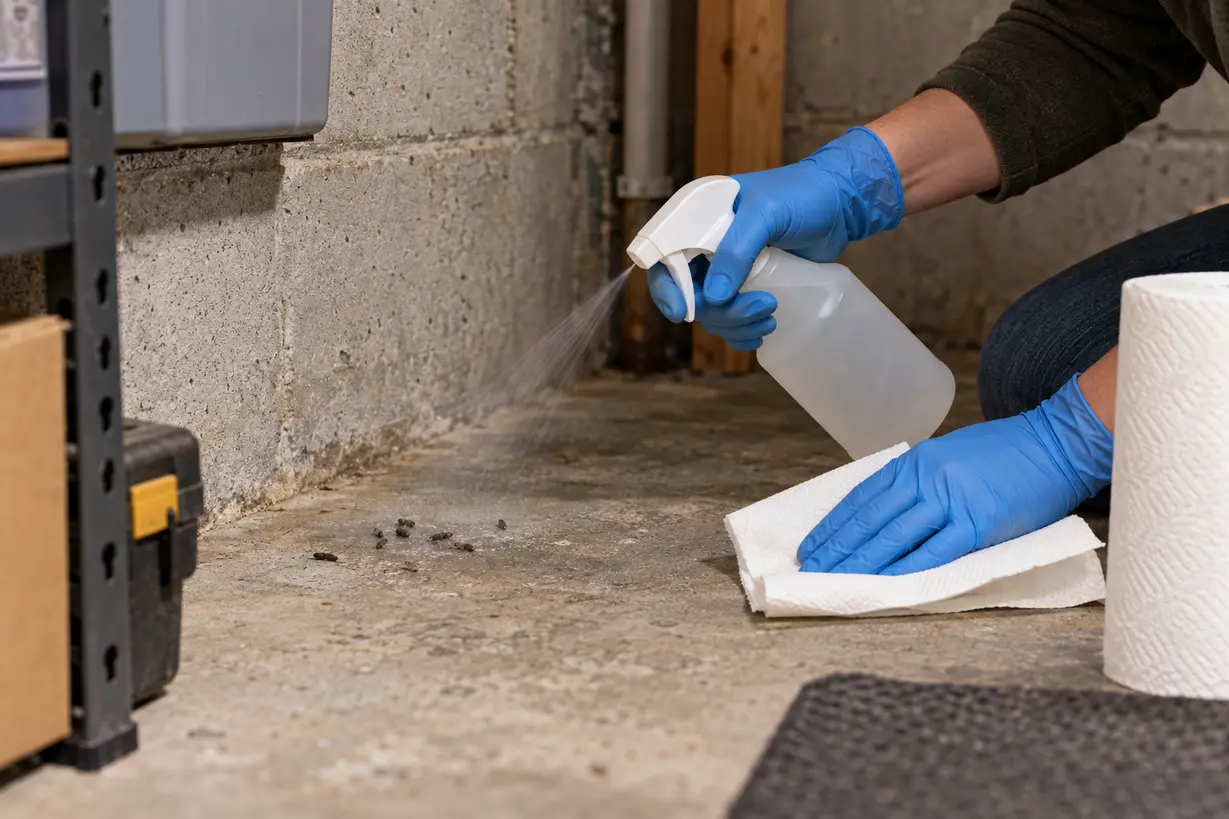
Do not dry sweep or vacuum rodent droppings or urine.
Current CDC cleanup guidance recommends wearing rubber or plastic gloves, thoroughly wetting urine and droppings with an appropriate disinfectant, allowing the product to work according to its directions, wiping the material up, and disinfecting the surrounding hard surface. Heavy infestations require additional precautions.
In a commercial setting, follow your facility’s sanitation, occupational safety, food-safety, and incident-reporting procedures as applicable. If contamination involves food, food-contact surfaces, HVAC systems, sensitive resident or patient areas, or a heavy infestation, the response may require additional professional or regulatory guidance.
A Rat Sighting Is a Clue, Not the Whole Inspection
Seeing one rat does not tell you the size or exact location of a problem. Likewise, one old gnaw mark does not prove there is current activity. A useful commercial inspection combines multiple clues, documents where they occur, and looks for the conditions that connect them: food, water, shelter, travel routes, and access points.
That broader approach is consistent with Integrated Pest Management (IPM), which emphasizes inspection and correcting the conditions that support pests rather than relying on a single control tactic.
How Commercial Rat Prevention Goes Beyond Traps
Traps can be useful, but a long-term commercial strategy also asks why rats can access and use the property in the first place. Depending on the facility, prevention may include improving sanitation, correcting moisture issues, organizing storage, reducing exterior harborage, protecting food and waste, repairing door sweeps, sealing appropriate gaps, and monitoring known activity zones.
Eco Serve’s commercial pest control services use an IPM-focused approach that can combine preventive and active pest management based on the needs of the property. For businesses already seeing rodent evidence, Eco Serve also offers rodent control in Western New York for residential and commercial properties.
When to Bring in a Commercial Pest Professional
Consider professional evaluation when signs recur after cleanup, droppings appear in multiple areas, burrows are active near the structure, gnawing affects wiring or building materials, staff repeatedly hear movement, food or stored products may be affected, or the facility has sensitive sanitation or regulatory requirements.
A commercial pest professional can help connect the visible evidence to entry points and conducive conditions across the property. If your Buffalo or Western New York facility is seeing signs of rats, contact Eco Serve Pest Services to discuss a commercial pest-control plan designed around your building and operation.
Frequently Asked Questions
What are the first signs of rats in a commercial building?
Droppings, fresh gnaw marks, rub marks, tracks, burrows, damaged packaging, unusual odors, and repeated noises in hidden areas are common early clues. Often, these signs appear before anyone sees a live rat.
Where do rats usually hide in businesses?
Rats favor protected areas close to food, water, and shelter. Depending on the building, that can include storage rooms, wall voids, utility spaces, areas behind equipment, loading zones, waste areas, and exterior burrows near foundations or slabs.
Does seeing one rat mean there is an infestation?
A single sighting does not reveal the size of the problem. It should trigger an inspection for additional evidence such as fresh droppings, gnawing, tracks, rub marks, burrows, and entry points.
Should employees sweep up rat droppings?
No. CDC guidance says not to sweep or vacuum dry rodent urine, droppings, or nesting material before disinfection because this can put contaminated particles into the air. Follow CDC guidance and your facility-specific procedures.
Why are loading docks and dumpsters common inspection areas?
They can combine food or waste, shelter, frequent deliveries, open doors, and building edges. Those conditions can create exterior activity and potential routes into the facility.
Can Eco Serve help commercial properties with rat problems?
Yes. Eco Serve Pest Services offers commercial pest control and rodent control for businesses and facilities across Western New York. The appropriate strategy depends on the property, activity, entry points, and operating environment.