

White-Footed Mice in Western New York
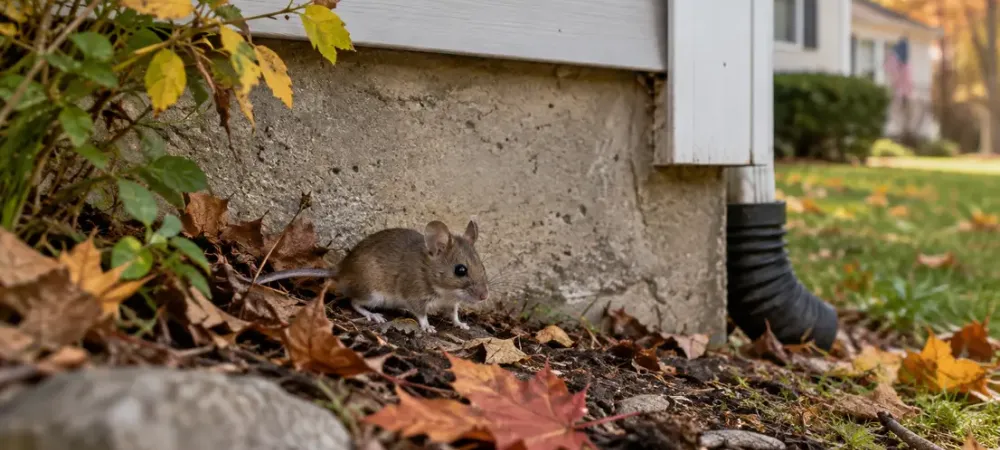
White-footed mice (Peromyscus leucopus) are native woodland rodents found across much of the eastern United States, including New York. They are recognizable by their brown-to-reddish upper fur, white belly and feet, large ears, and two-toned tail, although they can be difficult to distinguish from deer mice by appearance alone. Around Western New York homes, they may move into garages, sheds, barns, basements, attics, and wall voids when a structure offers shelter and food. They also matter to public health because they are highly competent hosts for the bacteria that cause Lyme disease, which feeding black-legged ticks can acquire. Indoors, the practical priorities are the same as with other mice: identify activity, remove food and shelter, close entry points at the right time, use safe cleanup practices, and address an active population before it becomes established. Eco Serve Pest Services provides rodent control in Western New York that combines inspection, control, exclusion, and prevention based on the conditions at the property.
- White-footed mice are native outdoor mice, not the same species as the common house mouse.
- They usually have brown or reddish-brown upper fur, white feet and underside, large ears, and a bicolored tail, but deer mice can look very similar.
- They are primarily nocturnal, active year-round, good climbers, and commonly associated with wooded, brushy, and edge habitats.
- White-footed mice are important hosts in the ecology of black-legged ticks and Lyme disease bacteria. This does not mean a mouse directly gives a person Lyme disease; infected ticks transmit Lyme disease through their bites.
- Indoors, watch for droppings, gnawing, damaged food packages, nesting material, nighttime sounds, and evidence around small exterior openings.
- Never sweep or vacuum dry rodent droppings or nesting material. CDC guidance recommends wetting contaminated material thoroughly with disinfectant before wiping it up.
What Is a White-Footed Mouse?
The white-footed mouse, Peromyscus leucopus, is a small native rodent widespread through the eastern and central United States. Unlike the house mouse, which is closely associated with human buildings, white-footed mice are naturally at home in forests, brushy areas, field edges, and other vegetated habitats. Their range and habitat preferences make encounters around suburban and rural properties in Western New York entirely plausible, especially where homes border woods, overgrown vegetation, stone walls, sheds, or outbuildings.
White-footed mice are mostly active at night and remain active through the year rather than hibernating. They can climb well and use protected cavities for shelter. Outdoors, they play a normal ecological role as seed and insect consumers and as prey for larger wildlife. The problem begins when a mouse finds that a house, garage, barn, or shed offers easier access to food and a protected nesting site.
What Does a White-Footed Mouse Look Like?
White-footed mice are small, compact mice with relatively large ears and dark eyes. Their upper fur can range from grayish brown to warm reddish brown, while the underside and feet are white. The tail is usually distinctly two-toned, darker above and lighter below. These traits are useful clues, but identification from a quick sighting or a single photograph can still be difficult because deer mice (Peromyscus maniculatus) can look very similar.
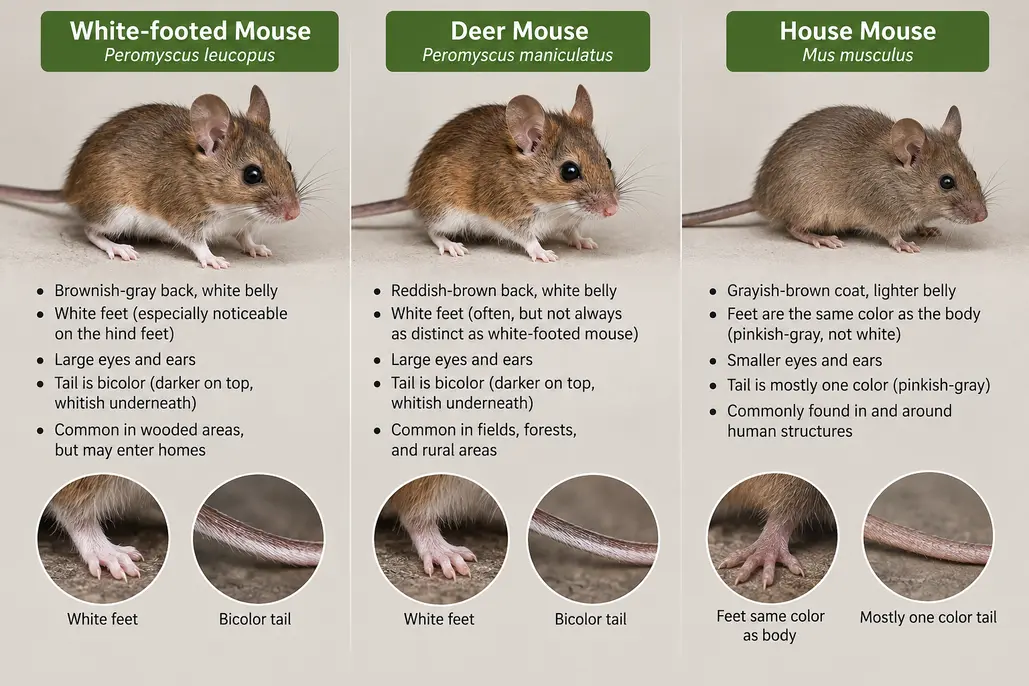
| Clue | White-footed mouse | Deer mouse | House mouse |
|---|---|---|---|
| Upper fur | Brown to reddish brown | Grayish to reddish brown, varies by region | Gray to brown |
| Underside / feet | White | Usually white | Usually grayish or buff rather than sharply white |
| Tail | Often clearly bicolored | Usually bicolored and may appear sharply divided | More uniformly colored and relatively scaly |
| Typical setting | Woodlands, brush, edges; may enter structures | Woodlands and open habitats; may enter structures | Strongly associated with buildings and human food |
| Identification caution | Can be hard to separate from deer mouse visually | Can be hard to separate from white-footed mouse visually | Usually easier to distinguish from Peromyscus mice |
Where Do White-Footed Mice Live in Western New York?
White-footed mice favor wooded and brushy environments but adapt well to fragmented landscapes where yards, fields, parks, and forest edges meet. That makes many Western New York properties suitable habitat even when the mouse spends most of its time outdoors. Woodpiles, dense groundcover, sheds, garages, stone walls, stored materials, and vegetation near a foundation can provide cover as mice move through a property.
As fall progresses, buildings can become attractive sources of protected shelter. Eco Serve’s guide to why mice and rats move indoors when temperatures drop explains why cooler nights are a practical reminder to inspect foundations, doors, utility penetrations, vents, soffits, and other vulnerable areas.
What Do White-Footed Mice Eat?
White-footed mice are opportunistic omnivores. Their natural diet includes seeds, nuts, berries, fruits, fungi, and invertebrates. In and around a home, those same feeding habits can lead them to bird seed, pet food, animal feed, pantry grains, spilled food, and other accessible items. Removing easy food sources is therefore part of prevention, not just housekeeping.
How Do White-Footed Mice Behave?
- Primarily nocturnal: activity is most common after dark.
- Active year-round: they do not hibernate through a Western New York winter.
- Good climbers and jumpers: activity is not limited to floor level.
- Naturally outdoor-oriented: a sighting outside does not automatically mean there is an indoor infestation.
- Shelter-seeking: cavities, stored materials, wall voids, attics, sheds, and other protected spaces can become nesting sites when accessible.
Why Would a White-Footed Mouse Enter a Home?
A home does not have to be dirty to attract a mouse. A small opening plus reliable shelter, food, or water can be enough. Seasonal weather changes can increase pressure around buildings, but there is no single temperature that suddenly sends every mouse indoors. Think of fall as a period when exterior inspection becomes especially valuable.
Common access points are similar to those used by other mice. Eco Serve’s mice control guide for Buffalo and Western New York covers identification, entry points, prevention, and removal in more detail.
Signs a White-Footed Mouse May Be Inside
Signs of mouse activity tell you that a rodent may be present, but they usually do not identify the species by themselves. Look at the full pattern of evidence and the setting rather than assuming every mouse sign belongs to a white-footed mouse.
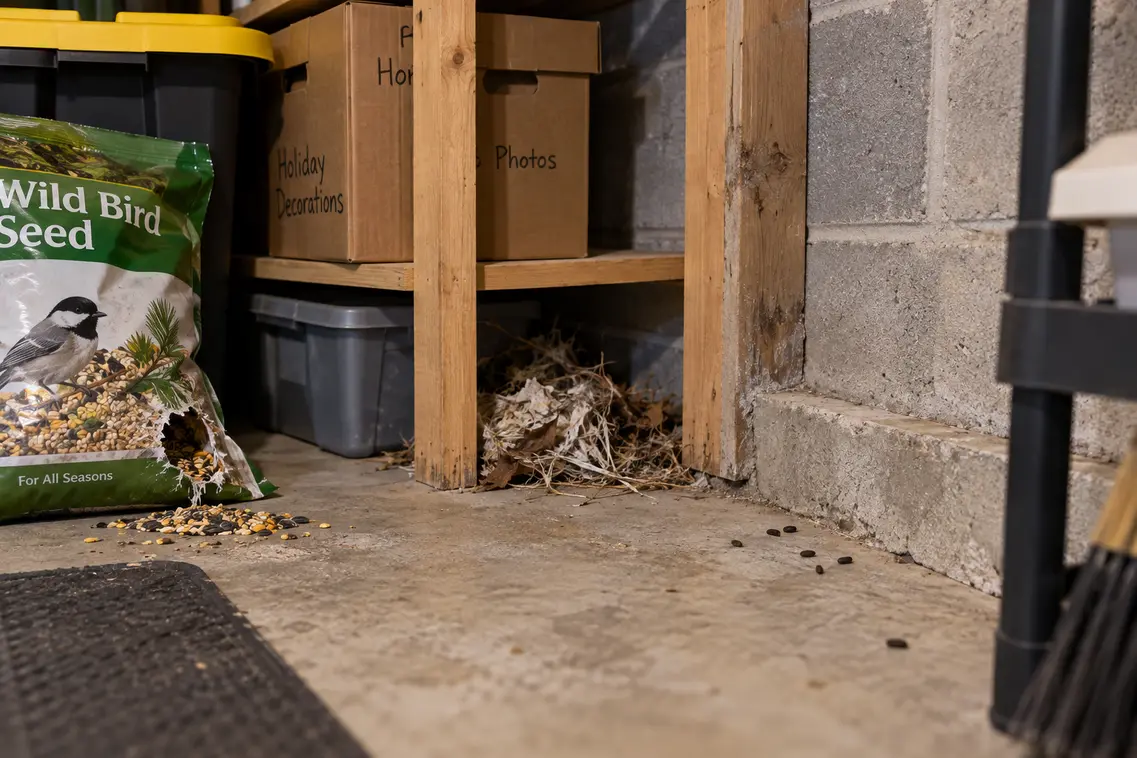
- Small dark droppings in cabinets, pantries, storage areas, attics, basements, garages, or along travel routes.
- Gnaw marks on food packaging, wood, insulation, plastic, or wiring.
- Shredded paper, fabric, insulation, dried plant material, or other nesting material in a protected location.
- Scratching, scurrying, or gnawing sounds at night.
- Chewed food containers or disturbed bird seed, pet food, or stored grains.
- A live or dead mouse, especially near a garage, basement, utility area, attic, or outbuilding.
Are White-Footed Mice Dangerous?
White-footed mice are not animals to panic about, but their presence indoors deserves attention. The main concerns are disease ecology, contamination from rodent waste, and property damage from gnawing and nesting.
White-Footed Mice, Black-Legged Ticks, and Lyme Disease
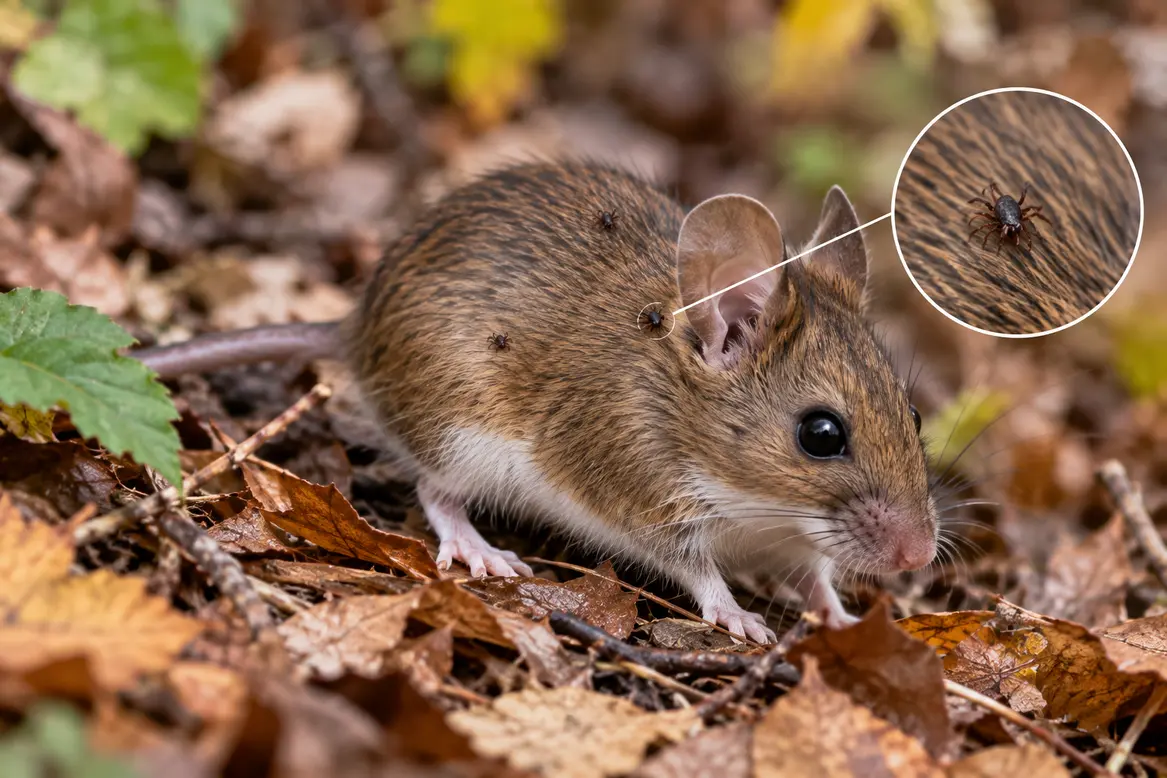
White-footed mice are highly competent reservoir hosts for Borrelia burgdorferi, the bacterium that causes Lyme disease in North America. In simple terms, an uninfected larval black-legged tick can feed on an infected mouse, acquire the bacterium, and later carry it into its next life stage. A person does not get Lyme disease simply because a white-footed mouse was nearby; Lyme disease is transmitted to people through the bite of an infected tick. White-footed mice are one important part of a larger ecological system that also involves ticks and multiple wildlife hosts.
What About Hantavirus?
Hantavirus information needs careful wording because different hantaviruses are associated with different rodent hosts. The deer mouse is the primary reservoir for Sin Nombre virus, the leading cause of hantavirus pulmonary syndrome in the United States. White-footed mice have been associated with New York orthohantavirus, and CDC has documented human disease linked to this virus. For homeowners, the practical takeaway is not to diagnose risk by mouse species. Treat rodent urine, droppings, and nesting material cautiously and follow current CDC cleanup guidance.
Property and Food Contamination Risks
Like other mice, white-footed mice can gnaw while exploring and maintaining their teeth. Indoors, that may mean damage to food packaging, insulation, wood, stored materials, and wiring. Urine, droppings, and nesting materials can also contaminate nearby surfaces and stored goods. These risks are another reason to address repeated indoor activity rather than relying on a single trap and assuming the problem is finished.
How to Clean Up Mouse Droppings Safely
If you find rodent urine, droppings, or nesting material, avoid dry cleanup methods. CDC guidance specifically says not to sweep or vacuum these materials before they have been disinfected because that can send contaminated particles into the air.
- 1Ventilate enclosed spaces before cleanup when appropriate.
- 2Wear rubber or plastic gloves.
- 3Thoroughly wet urine and droppings with a household disinfectant labeled as a disinfectant, or use the bleach solution described in current CDC guidance.
- 4Allow the disinfectant to sit for the label-directed contact time; CDC’s current general guidance uses five minutes for its described method.
- 5Wipe up the material with paper towels and dispose of it appropriately.
- 6Disinfect the surrounding hard surfaces and wash hands after removing gloves.
Heavy infestations, contaminated HVAC systems, or extensive nesting can require additional precautions. Use the current CDC cleanup instructions for the specific situation rather than improvising.
How to Prevent White-Footed Mice From Getting Inside
Prevention works best when exclusion is combined with food, water, and shelter management. The U.S. Environmental Protection Agency recommends sealing openings, removing potential nesting sites, and cleaning up accessible food and water sources as core rodent-prevention measures.
- Inspect the foundation, siding transitions, garage doors, exterior doors, vents, soffits, roofline, and utility penetrations.
- Repair gaps with durable materials suited to the opening. Foam or soft filler alone may be vulnerable to gnawing.
- Replace worn door sweeps and repair damaged screens or vent covers.
- Store bird seed, pet food, pantry goods, and animal feed in sturdy containers with secure lids.
- Clean spills and crumbs, secure garbage, and address leaking or standing water where practical.
- Reduce clutter in garages, basements, sheds, and storage areas.
- Move firewood and dense stored materials away from the foundation where practical.
- Trim or manage vegetation that creates continuous cover directly against the structure.
- If there is active indoor activity, address the mice before sealing a route that could trap them inside or redirect them deeper into the structure.
A preventive home plan can add another layer to these homeowner steps. Eco Serve’s Premium Plus program is designed to address current pest activity while also creating a protective pest barrier around the exterior of the home. For Western New York homeowners, that proactive exterior focus can be especially useful before seasonal weather shifts, when cooler evenings can increase pest pressure around homes and small openings become potential routes indoors.
Rather than waiting until pests are already active inside, recurring service gives the home attention throughout the year. Premium Plus covers a variety of common household pests seen in Western New York, and Eco Serve offers warranty-backed follow-up protection under its qualifying programs. Coverage and warranty terms vary by plan, so homeowners should confirm the current details for their property. The goal is not simply to react to a mouse sighting, but to combine monitoring, exterior prevention, exclusion where appropriate, and treatment when pests do make their way indoors.
When Professional Rodent Control Makes Sense
A single outdoor sighting does not always require treatment. Professional help becomes more useful when evidence is indoors, activity keeps returning, the entry point is unclear, mice are in wall voids or attics, there is extensive contamination, or the property has multiple vulnerable openings.
Eco Serve Pest Services’ professional rodent control includes inspection of interior and exterior spaces, control of active rodent problems, and attention to exclusion and prevention. For homeowners who want a more proactive approach beyond a single mouse issue, Premium Plus can help address a broader range of common household pests while maintaining an exterior pest barrier throughout the year. This gives homeowners a way to treat pest activity that has already made it indoors while also targeting the exterior before seasonal weather shifts increase pressure around the home. Qualifying Eco Serve programs also include warranty-backed follow-up protection; exact coverage and warranty terms should be confirmed for the selected plan.
White-Footed Mice Belong Outdoors, Not in Your Pantry
White-footed mice are a normal part of Western New York’s outdoor environment. Their presence in woods or along a property edge is not automatically a pest emergency. The situation changes when they begin using a home, garage, shed, or other structure for food and shelter. Knowing what they look like, recognizing mouse evidence early, handling rodent waste correctly, and tightening up entry points can reduce the chance that a seasonal visitor becomes a recurring indoor problem.
If you are finding droppings, hearing nighttime activity, or dealing with a recurring mouse problem, contact Eco Serve Pest Services for an inspection and a rodent-control plan tailored to your property.
Frequently Asked Questions
Are white-footed mice common in New York?
Yes. White-footed mice are widely distributed in the eastern United States and occur in New York. They are especially associated with wooded, brushy, and edge habitats.
How can I tell a white-footed mouse from a deer mouse?
Both can have white feet, pale undersides, large ears, and bicolored tails, so visual identification can be difficult. Color, tail proportions, geography, measurements, and other anatomical details may be needed for confident species identification.
Are white-footed mice the same as house mice?
No. White-footed mice are Peromyscus leucopus, a native species strongly associated with natural habitats. The common house mouse is Mus musculus and is much more closely tied to buildings and human food sources.
Can white-footed mice give people Lyme disease?
Not directly through normal proximity. White-footed mice can infect feeding black-legged ticks with Lyme disease bacteria. People acquire Lyme disease through the bite of an infected tick.
Do white-footed mice carry hantavirus?
White-footed mice have been associated with New York orthohantavirus, while deer mice are the primary reservoir for Sin Nombre virus. Because homeowners often cannot confidently identify mouse species, all rodent waste should be handled using current CDC precautions.
Should I vacuum mouse droppings?
Not while they are dry. CDC guidance says to wet rodent urine and droppings thoroughly with disinfectant before wiping them up, rather than sweeping or vacuuming dry material.
What should I do if mice keep coming back every fall?
Recurring activity usually means the property still offers an entry route, food, shelter, or a combination of these. A professional inspection can help identify active travel routes and determine the right sequence for control, exclusion, and monitoring.