

Why Are Bugs Coming Inside in Fall? A Western New York Guide to Overwintering Pests
Bottom Line Up Front
Cooler nighttime temperatures are an early seasonal signal for mice and rats to seek more dependable shelter, food, and water. In Western New York, that pressure can begin before the first frost. Rodents do not need an open door; they may investigate gaps around foundations, garage doors, utility lines, vents, and other weak points. Inspecting and sealing likely entry areas now can help prevent a small fall problem from becoming an indoor winter problem.
TL;DR — Key Takeaways
- Rodent pressure can increase as nights cool, even while daytime temperatures still feel mild.
- Mice are small, curious climbers that can exploit very small gaps; rats are larger, more cautious, and often stay closer to ground-level cover, food, and water.
- Droppings, gnaw marks, nesting material, rub marks, and nighttime noises may appear before you see a live rodent.
- Exclusion works best when paired with food, water, and clutter reduction.
- If activity is already indoors, identify active entry points before sealing so rodents are not trapped inside.
Cool Nights Can Start the Fall Rodent Shift
Western New York homeowners often think of rodent season as a winter problem. In reality, the transition can start earlier. When nighttime temperatures begin dropping in late summer and early fall, outdoor conditions become less predictable. Natural cover and food sources change, while a house, garage, shed, restaurant, or apartment building may offer a steady combination of warmth, protection, food, and water.
A cool night does not force every mouse or rat indoors at once, and there is no single temperature that triggers all rodent activity. The more useful way to think about it is seasonal pressure: as nights grow cooler and outdoor resources shift, rodents have more reason to explore structures. If they find an accessible gap and favorable conditions inside, they may stay.
Cornell Integrated Pest Management notes that some mice enter buildings in fall to find a suitable nesting place and protection from cold temperatures. That is why the weeks when WNY residents first notice cooler evenings are a practical time to inspect the exterior. Eco Serve's seasonal rodent control guide explains how that pressure continues through fall and winter.
Why Your Home Looks Appealing to Rodents
Rodents are looking for usable resources, not simply a higher thermostat setting. A building becomes more attractive when it provides several of the following at once:
- Shelter from cold, wind, rain, and predators
- Food from pantries, pet bowls, bird seed, garbage, compost, or spills
- Water from leaks, condensation, pet dishes, or drainage areas
- Hidden nesting spaces inside wall voids, insulation, stored boxes, crawl spaces, or clutter
- Travel routes along foundations, vegetation, fence lines, pipes, and utility penetrations
The combination matters. Sealing a visible crack helps, but prevention is stronger when you also remove the food and shelter that reward rodents for continuing to explore the property.
Mice vs. Rats: Which Rodent May Be Trying to Get Inside?
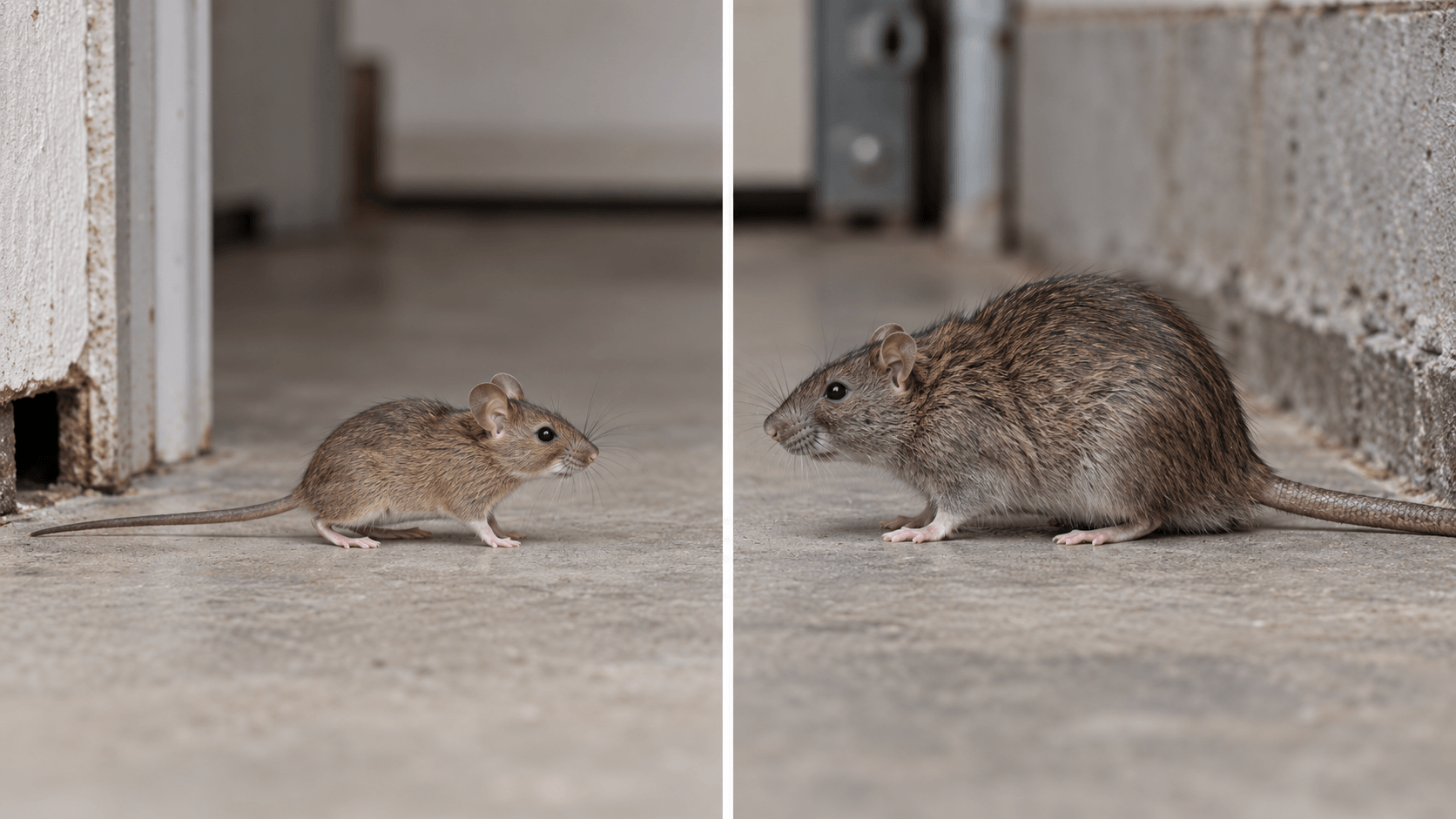
Image 1: Side-by-side comparison of a house mouse and a Norway rat, highlighting differences in their overall size, body shape, ears, snout, and tail.
Both mice and rats may move into buildings as outdoor conditions become less favorable, but they do not behave exactly the same way. The comparison below can help you interpret the location and type of evidence you find without relying on a brief sighting alone.
| Clue | Mice | Rats | What to Check |
|---|---|---|---|
| Typical build | Small, slender body | Larger, heavier body | Use several clues together; size can be hard to judge during a quick sighting. |
| Common access pattern | Very small gaps; may climb to reach openings | Larger gaps; often follows ground-level edges, burrows, drains, or damaged openings | Foundation joints, door sweeps, vents, utility lines, roof and soffit gaps |
| Indoor evidence | Small droppings, light scratching, small gnaw marks | Larger droppings, heavier gnawing or movement, greasy rub marks | Pantries, under sinks, basements, garages, attics, wall voids |
| Behavior around changes | Often curious and may investigate new objects | Often cautious around unfamiliar objects | Avoid assuming one trap or one night of monitoring tells the whole story |
| Likely shelter areas | Wall voids, attics, cabinets, stored boxes, insulation | Basements, crawl spaces, garages, utility areas, burrows near structures | Dark, protected areas close to food and water |
Table 1. Comparison of common mouse and rat clues, access patterns, and inspection areas around a Western New York property.
For a deeper look at species-specific evidence, see Eco Serve's mice identification and prevention guide and rat control guide for Buffalo and Western New York.
Where Rodents Test a Home First
Rodents tend to reuse protected travel routes, so begin your inspection low and work around the entire building. Pay special attention to places where materials meet or where utilities pass through the exterior.
Foundations and siding: Look for cracks, deteriorated mortar, damaged siding, gaps at corners, and openings where additions meet the original structure.
Doors and garages: Check worn weatherstripping, daylight beneath doors, damaged garage-door seals, and doors that do not close squarely.
Utility penetrations: Inspect around pipes, cables, conduits, hose bibs, and HVAC lines.
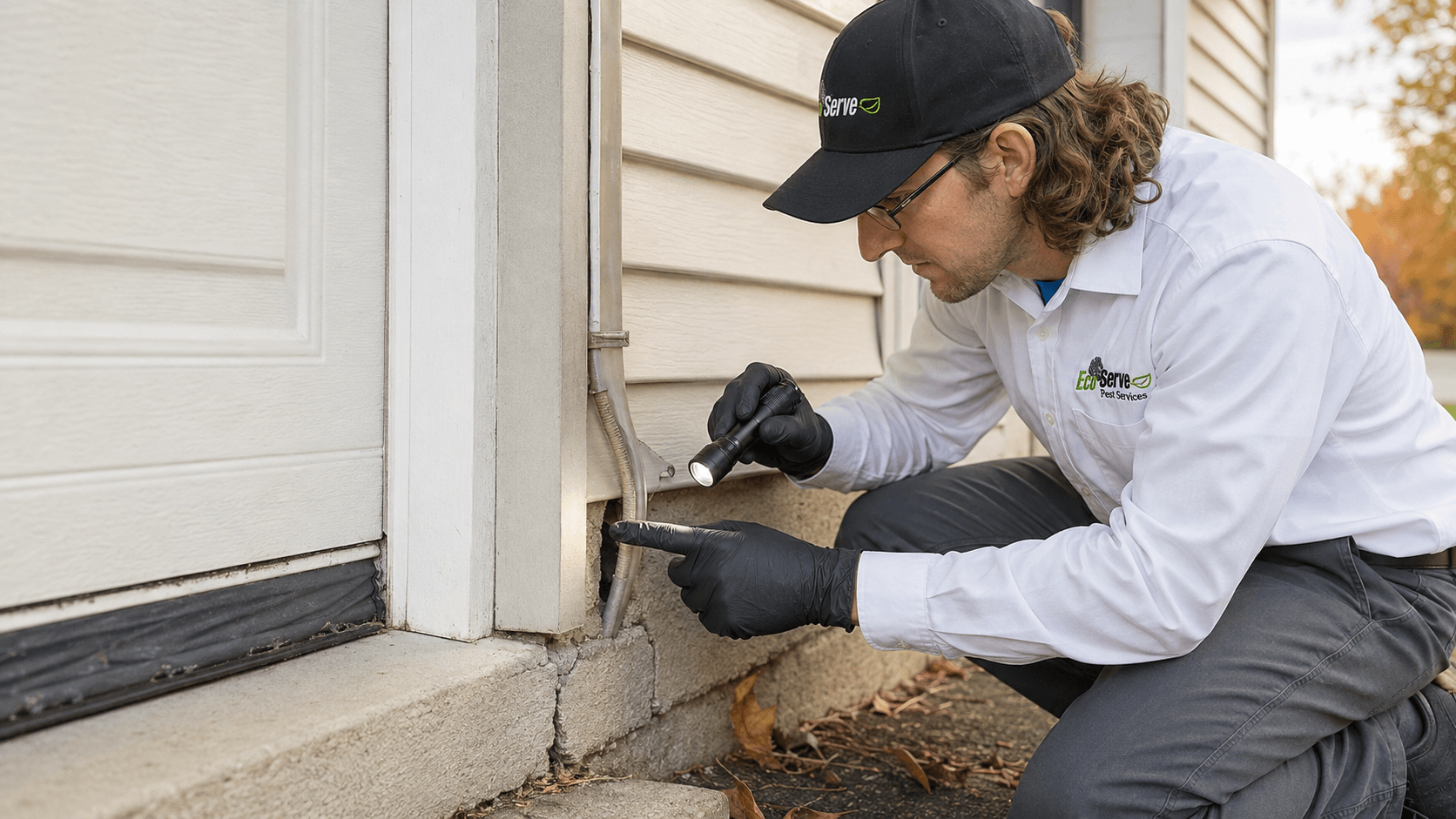
Image 2: Service specialist inspecting common rodent entry points: small construction gaps can become practical rodent entry routes as cooler nights increase pressure around a property.
Vents, soffits, and rooflines: Look for missing screens, loose vent covers, damaged soffits, and gaps where roof materials meet walls.
Low decks, steps, and landscaping: Dense vegetation, stored materials, leaf piles, and firewood near the foundation can conceal travel routes or burrows.
Early Signs Rodents May Already Be Inside
You may notice evidence before you see the animal. The U.S. Environmental Protection Agency identifies droppings, shredded nesting material, chewed food packages, holes, and stale odors among the signs of rodent activity. Around a home or business, also watch for:
- Scratching, scurrying, or gnawing sounds after dark
- Droppings in cupboards, under sinks, along walls, or near stored food
- Gnaw marks on packaging, wood, plastic, or other materials
- Shredded paper, fabric, insulation, or dried plant matter gathered in a protected space
- Greasy or dirty rub marks along repeated travel routes
- Pet interest focused on one wall, cabinet, appliance, or utility area
One dropping or noise deserves investigation, but it does not tell you the species, population size, or entry route by itself. Look for a pattern and avoid handling droppings or nesting material without appropriate precautions.
A Practical Early-Fall Rodent Prevention Checklist
The best time to make a building harder to enter is before repeated indoor evidence appears. Use this checklist as nighttime temperatures begin to fall:
- Walk the exterior at ground level and mark cracks, damaged materials, and utility gaps.
- Check door sweeps, garage seals, window screens, vents, soffits, and roofline transitions.
- Repair openings with durable materials appropriate for the location. Rodents may defeat weak or poorly attached repairs.
- Move firewood, debris, and dense stored items away from the foundation where practical.
- Store pet food, bird seed, pantry goods, and animal feed in sturdy containers with secure lids.
- Keep garbage and compost secured, clean spills, and address accessible water or leaks.
- Reduce cardboard and clutter in basements, garages, attics, and storage areas.
- Monitor suspicious areas for droppings, gnawing, or renewed activity.
These steps build on the prevention measures in Eco Serve's Tonawanda rodent prevention guide and the broader exclusion guidance used in integrated pest management.
Do Not Seal an Active Entry Point Without a Plan
Exclusion is essential, but timing matters. If a rodent is already using an opening, immediately closing it can trap the animal inside or cause it to search for another route through the structure. Cornell IPM recommends determining whether an entry site is active and addressing animals already inside before completing exclusion.
If you are finding fresh droppings, repeated sounds, burrows, or gnawing, a professional inspection can help identify the rodent, locate travel routes, and determine the right sequence for control and repairs. This is especially helpful when activity involves wall voids, attics, crawl spaces, multi-unit buildings, food-service areas, or recurring seasonal problems.
Cooler Nights Are Your Reminder to Inspect, Not Panic
The first cool evenings in Western New York do not guarantee a rodent problem. They are a useful reminder that mice and rats may soon have more incentive to investigate buildings. A careful exterior inspection, durable repairs, secure food storage, and early attention to suspicious evidence can make your property less inviting before winter settles in.
If you are hearing movement, finding droppings, or dealing with a recurring fall problem, Eco Serve Pest Services can inspect the property and recommend a plan based on the rodent and the conditions present. Learn more about rodent control in Western New York or contact Eco Serve for a free quote.
Frequently Asked Questions
Have a question we didn't cover here? Read Eco Serve's frequently asked questions about mice, browse the full Eco Serve FAQ page, or contact us for a free quote.