
Why Yellow Jackets Get So Aggressive in Late Summer (And What to Do About It)
Bottom Line Up Front
We promise you aren't imagining things — yellow jackets really do get meaner as summer winds down. By late summer, colonies have reached their largest size, their usual food supply starts running short, and workers shift from hunting insects to scavenging sugary human food. That combination of a bigger, hungrier colony and dwindling natural food is what drives the sudden uptick in backyard encounters.
Knowing what's drawing them in, and how to tell a few stray foragers from an active nest nearby, can help homeowners throughout Buffalo, Amherst, and West Seneca get through the rest of the season with fewer stings.
TL;DR — Key Takeaways
- Yellow jacket colonies peak in size by late summer, sometimes reaching several thousand workers from a single queen.
- As larvae mature and fewer new ones are being raised, they produce less of the sugary secretion adult workers rely on for energy.
- To make up the difference, workers turn to scavenging soda, fruit, trash, and other sugary sources, which is why yards see more activity this time of year.
- A crowded, food-stressed, declining colony is a defensive one, so stings become more common even without obvious provocation.
- A few stray wasps at a cookout is different from an active nest nearby, and telling them apart determines the safest next step.
Introduction
If it feels like yellow jackets get noticeably meaner every August and September, that's not just a feeling. Their behavior really does shift this time of year, and it has everything to do with what's happening inside the colony rather than anything homeowners are doing differently.
Understanding why this happens, and what's actually pulling them into yards throughout Buffalo, Cheektowaga, North Tonawanda, and the rest of Western New York, makes it a lot easier to avoid getting stung during the last stretch of the outdoor season.
The Yellow Jacket Life Cycle: How Colonies Build Through Summer
A yellow jacket colony starts from scratch every spring. A single overwintered queen builds a small paper nest alone, raising the first handful of workers by herself. Once those workers mature, they take over foraging, nest-building, and larval care, which lets the colony grow quickly through June and July.
According to Clemson University's Home & Garden Information Center, adult workers spend the early season gathering protein, mainly insects, to feed the colony's larvae, while the larvae in turn produce a sugary secretion the adults eat in exchange. Entomologists call this back-and-forth exchange trophallaxis, and it's the arrangement that keeps the whole colony fed for most of the summer.
By August, a single nest can hold thousands of workers, all of it built from one queen's spring start.
Why Late Summer Flips the Menu
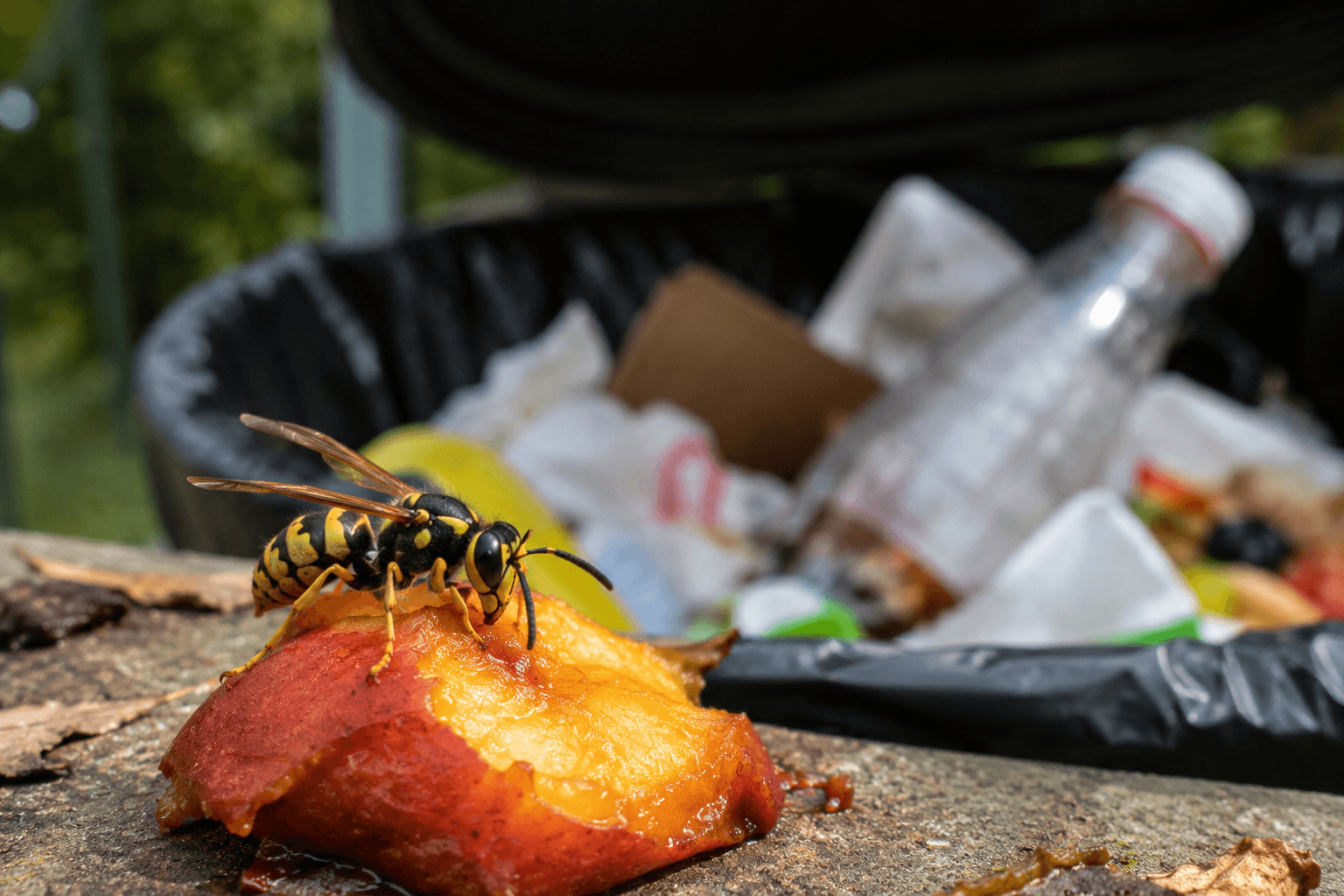
Image 2: Yellow jacket feeding on fallen fruit from an open trash can
Late in the season, two things happen at once inside the colony. First, the queen slows or stops laying new eggs, so fewer larvae are around to produce that sugary secretion adult workers depend on. Second, the colony's population is at its largest point of the year, meaning more workers are competing for a shrinking supply of sugar.
Research summarized by University of Illinois Extension points to this exact trade-off: adult yellow jackets normally rely on the sugary substance their larvae secrete, but as fewer larvae are being raised late in the season, workers are left looking for sugar elsewhere. That's what sends them toward sodas, fruit, and picnic leftovers instead of the insects they spent most of the summer hunting.
With less natural food to go around and a large, crowded colony to feed, workers become noticeably pushier around any sugar source they do find, human or otherwise.
What's Actually Drawing Them Into Your Yard
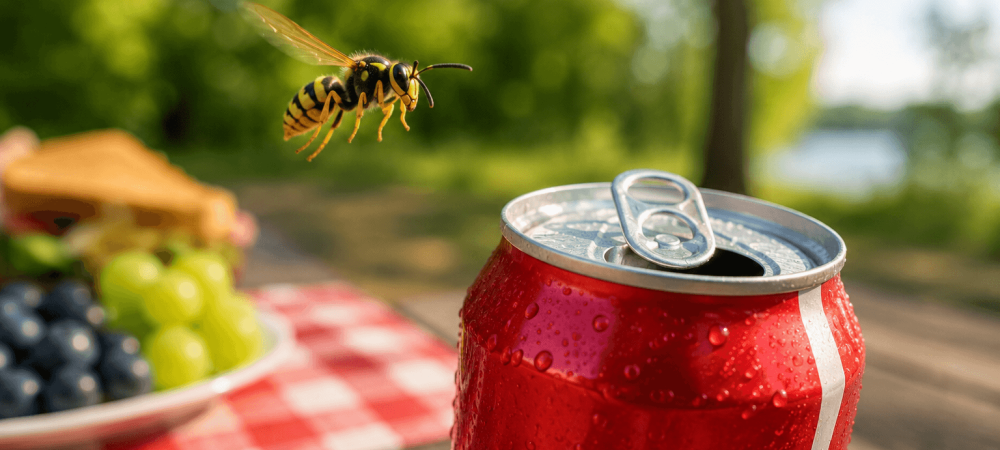
- Uncovered sugary drinks and cans: soda, juice, and beer left open outdoors are one of the biggest draws once natural sugar sources dry up.
- Fallen fruit: apples, pears, and other fruit dropping in the yard become an easy target as the season goes on.
- Trash and recycling bins: uncovered cans and food packaging are a reliable food source right through the fall.
- Cookouts and picnics: meat, condiments, and sweet foods left out at outdoor gatherings attract foragers quickly.
- Hummingbird feeders and pet food bowls: both offer easy sugar or protein that workers will return to repeatedly.
Per Ohio State University's Ohioline, large numbers of yellow jackets are commonly drawn to garbage cans, sweet beverages, fruit, and even scented clothing or perfume during this stretch of the season, which is why cookouts and backyard gatherings tend to see more activity than earlier in the summer.
Stray Wasp or Active Nest? How to Tell the Difference
A single yellow jacket circling your drink at a cookout is usually just a hungry forager passing through, not a sign of a nest nearby. A nest becomes the more likely explanation when the activity is repeated, concentrated, and tied to one specific spot in the yard.
| Likely a Stray Forager | Likely an Active Nest Nearby |
|---|---|
| One or two wasps investigating food or drinks at a single event | Repeated sightings in the same spot over several days |
| Activity that moves on once food is put away | Wasps flying in and out of one consistent entry point (a hole in the ground, a gap in siding, or a spot under an eave) |
| No consistent flight path back to one location | A visible paper nest hanging in a shrub or tree |
| Occurs mainly around uncovered food or drinks | Increased activity or aggression near a specific area of the yard, even without food present |
Table 1. Signs that distinguish an occasional forager from an established colony nearby.
If you're noticing the second column more than the first, treat it as a nest until proven otherwise rather than waiting for a clearer sign. For more on what a nest can look like once you spot one, see our earlier post on what to do when you spot a yellow jacket nest.
When to Call a Professional
- You've located a nest entrance, whether it's in the ground, a wall void, or hanging in a tree.
- The nest or activity is near a doorway, patio, mailbox, or other high-traffic part of the property.
- Someone in the household has a known allergy to stings.
- You've noticed repeated activity in the same area for more than a few days.
- A DIY spray or store-bought trap hasn't slowed things down.
Late-summer colonies are at their largest and most defensive, which makes DIY removal riskier than it looks. We've covered this in more detail in Why You Should Avoid DIY Yellow Jacket Treatments. Eco Serve's Stinging Insect Control service locates the nest first, whether it's hidden underground, tucked in a wall void, or exposed in a tree, and treats it accordingly.
*An important note about DIY treatments: If yellow jackets are entering through an opening in a wall, spraying the visible entry point without locating the nest may repel them deeper into the structure. This can potentially push them into living areas of the home and make the problem more difficult to address.
Practical Prevention Tips for WNY Homeowners
- Keep sugary drinks covered or in cups you can see into, especially outdoors.
- Clean up spills and food scraps quickly at cookouts and picnics.
- Keep trash and recycling bins sealed and away from seating areas when possible.
- Pick up fallen fruit regularly if you have fruit trees in the yard.
- Walk the yard periodically to check for new activity near fence lines, wood piles, or shed foundations.
For more everyday prevention habits, see our post on Avoid Attracting Stinging Insects.
Don't Wait Out the Rest of the Season
Yellow jacket activity doesn't taper off until the first hard frost, so the next several weeks are typically the most active stretch of the year. If you're seeing repeated activity in one part of the yard, Eco Serve's Stinging Insect Control team can confirm whether it's a nest and handle it safely for homeowners throughout Clarence, Orchard Park, and the surrounding area.
Not sure what you're dealing with? A free quote and a conversation about your property costs nothing.
Frequently Asked Questions
Have a question we didn't cover here? Visit our Contact Us page, or browse the full Eco Serve FAQ page for answers to common questions about stinging insects and other pests throughout Western New York.