
Yellow Jackets vs. Bald-Faced Hornets: Identification & Differences
Bottom Line Up Front
Yellow jackets and bald-faced hornets are frequently mistaken for one another, but they behave very differently once a colony is established. Bald-faced hornets build large, exposed paper nests high in trees, shrubs, and eaves, while yellow jackets most often nest underground or inside wall voids, though some species will build aerial nests as well.
Knowing which pest you're dealing with, and where the nest is actually located, helps determine the safest and most effective way to handle it throughout the season across Buffalo, Amherst, Cheektowaga, and the rest of Western New York.
TL;DR — Key Takeaways
- Yellow jackets are black and yellow with slim, banded bodies, while bald-faced hornets are black with white or ivory face and body markings.
- Bald-faced hornets are technically a type of yellow jacket in the genus Dolichovespula, not a "true" hornet.
- Nest location is one of the clearest ways to tell them apart: bald-faced hornets build football-shaped paper nests in trees and shrubs, while yellow jackets usually nest in the ground or inside wall voids.
- Both species become more defensive as their colonies grow through late summer and into fall, which is when most stings occur in Western New York.
- Correct identification, including nest location, helps determine the safest and most effective removal approach.
Introduction
Every late summer, Western New York homeowners start noticing more yellow jackets buzzing around trash cans, picnics, and porches. Around the same time, many people spot a large gray, football-shaped nest hanging in a tree and assume it belongs to the same pest. In reality, that nest usually belongs to a bald-faced hornet, a close relative of the yellow jacket with its own appearance, habits, and nesting preferences.
Because these two stinging insects are so often confused, we put together this quick-reference guide to help homeowners throughout Buffalo, West Seneca, North Tonawanda, and the surrounding area tell them apart at a glance. For a broader look at how these pests compare to other stinging insects, check out our earlier post on wasps vs. bees vs. hornets.
Meet the Two Look-Alikes
Yellow jackets and bald-faced hornets both belong to the same family of social wasps, and despite its common name, the bald-faced hornet is more closely related to the yellow jacket than it is to true hornets like the European hornet. According to Penn State Extension, bald-faced hornet workers and queens are notably larger than most yellow jackets, which is one reason the two are so often mixed up despite their coloring being quite different.
Both insects are social, live in colonies with a single queen and hundreds of workers, and can become aggressive once they feel their nest is threatened. Where they differ most is in appearance and where they choose to build.
How to Tell Them Apart by Appearance
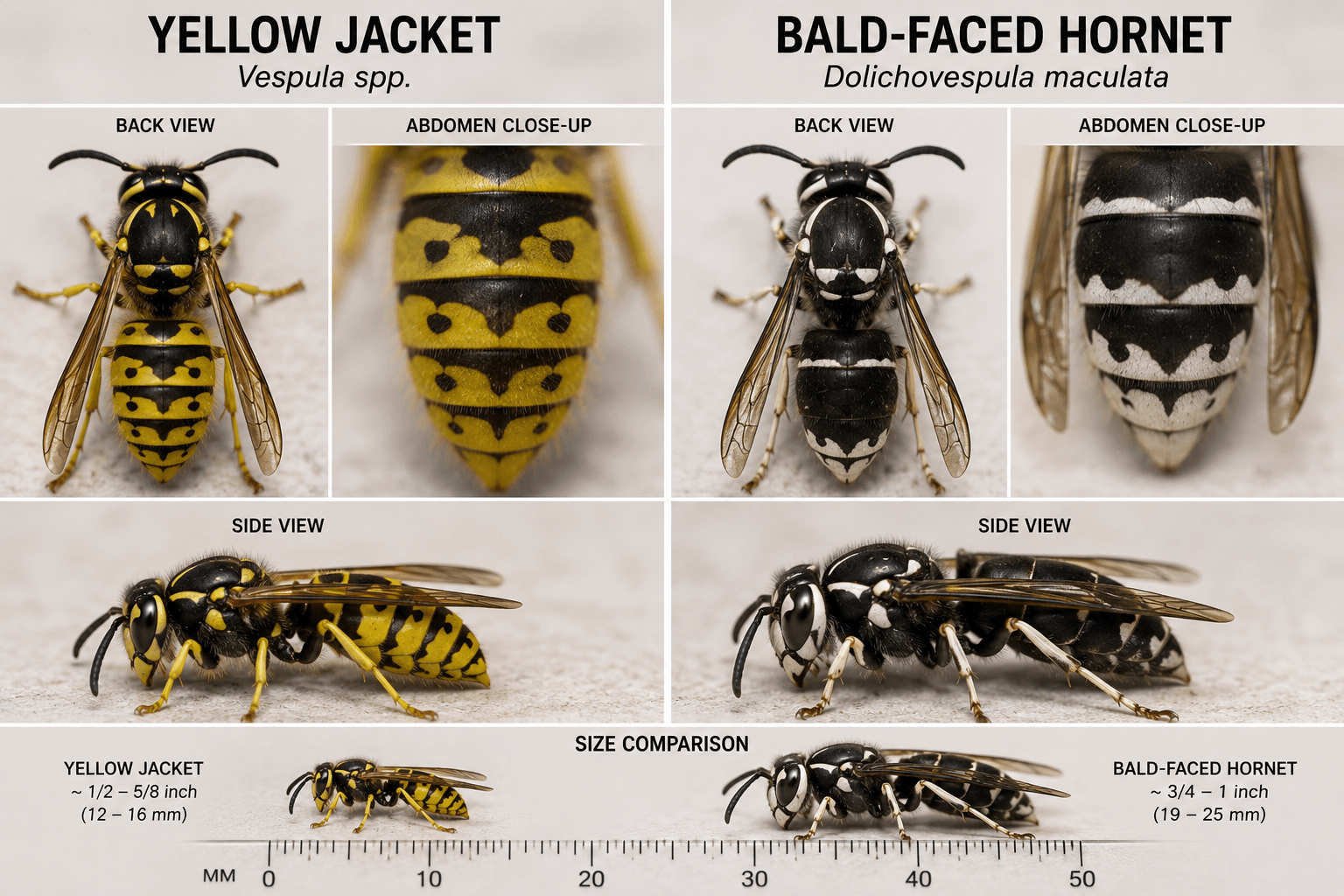
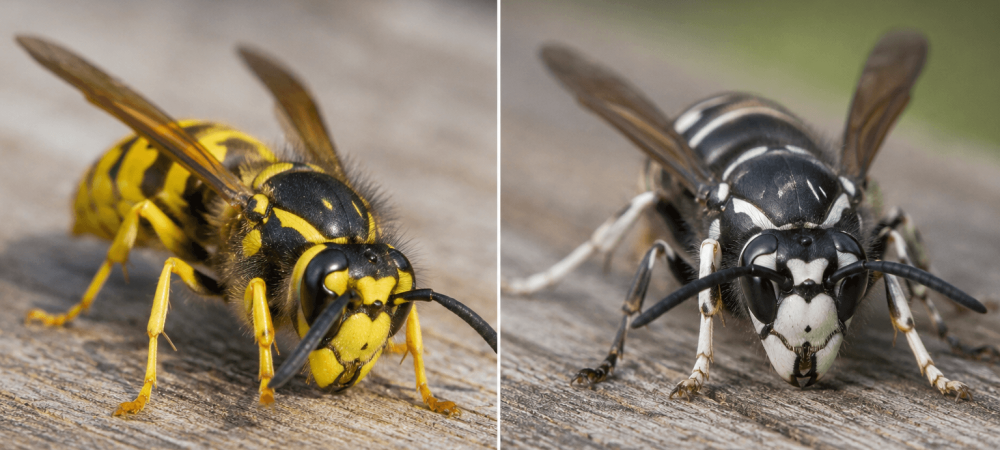
Image 1: Close-up comparison of a yellow jacket and a bald-faced hornet
- Yellow jackets: Bright yellow-and-black banded bodies, slender waists, and smooth, shiny exteriors. Most WNY yellow jackets are roughly 3/8 to 5/8 inch long.
- Bald-faced hornets: Black bodies with distinctive ivory-white markings on the face, thorax, and tip of the abdomen. They're stockier and often noticeably larger than yellow jackets, with workers commonly reaching 1/2 to 3/4 inch or more.
Per NC State Extension, the white facial markings are exactly where the "bald-faced" name comes from, making the face one of the fastest ways to rule out a yellow jacket at a glance.
Yellow Jackets vs. Bald-Faced Hornets: Side-by-Side Comparison
| Factor | Yellow Jacket | Bald-Faced Hornet | Why It Matters |
|---|---|---|---|
| Appearance | Yellow-and-black bands, slender build | Black body with white/ivory face markings, stockier build | Color alone is usually enough to tell them apart |
| Typical Size | 3/8–5/8 in. | 1/2–3/4 in. or larger | Bald-faced hornets often look noticeably bigger |
| Nest Location | Underground burrows, wall voids; some species build aerial nests | Large paper nests in trees, shrubs, or under eaves | Nest location often drives the safest treatment approach |
| Nest Material | Papery, chewed-wood carton, hidden from view | Gray, football-shaped exterior carton, fully exposed | Aerial nests are easier to spot; hidden nests are easier to disturb by accident |
| Aggression | Highly defensive, especially ground nests when disturbed by footsteps or vibration | Aggressive near the nest, calmer away from it | Both can deliver repeated, painful stings when a nest is threatened |
| Diet | Insects, meat, and sugary food/drinks; frequent scavengers at cookouts | Caterpillars and soft-bodied insects, plus some sugary food sources | Both are drawn to outdoor gatherings and trash areas |
Table 1. Key differences between yellow jackets and bald-faced hornets in Western New York.
Nesting Habits: Where You'll Find Each One
Bald-Faced Hornets: build large, enclosed paper nests that hang from tree branches, shrubs, or building overhangs. According to Penn State Extension, these nests are constructed from chewed wood fibers mixed with saliva, giving them a distinctive gray, papery texture, and they can grow to the size of a basketball by late summer, holding several hundred workers.
Yellow Jackets: most often nest underground, frequently taking over abandoned rodent burrows in mulch beds, along slopes, or at the base of trees. Some colonies settle into wall voids, soffits, or other hidden cavities around a home instead. A smaller number of yellow jacket species will build aerial nests in bushes or low branches, which is part of why identification based on nest location alone can sometimes be tricky.
Because ground and cavity nests are hidden from view, they're also the ones homeowners are most likely to disturb by accident while mowing, gardening, or walking near a wooded property line. For more on this seasonal pattern, see our post on what to do when you spot a yellow jacket nest.
Behavior and Aggression: What Sets Them Apart
Both insects can sting repeatedly and become defensive when their colony feels threatened, but the trigger points differ slightly. Ground-nesting yellow jackets are especially reactive to footsteps and vibration near the nest entrance, and once disturbed, they can rally dozens of nestmates within seconds. Bald-faced hornets, by contrast, tend to stay fairly calm away from the nest but will aggressively defend it, and the colony, if it's approached or bumped.
Both species also become progressively more assertive as colonies reach peak size in late summer, which lines up with when most calls to Eco Serve's stinging insect team come in. We've covered why homeowners should be cautious around this time of year in Why You Should Avoid DIY Yellow Jacket Treatments and Avoid Attracting Stinging Insects.
Why Correct Identification Matters
Species and nest location both influence the safest way to handle a colony. A hidden ground nest, a wall void colony, and an exposed aerial paper nest each call for a different approach, and treating one the way you'd treat another can provoke the colony instead of controlling it.
This is one of the main reasons DIY sprays and store-bought treatments often fall short: they're rarely matched to the specific nest type or location involved. Eco Serve's Stinging Insect Control service starts by identifying the species and pinpointing the nest, whether it's tucked underground, inside a wall void, or hanging from a tree, before building a treatment plan around it.
Practical Safety Tips for WNY Homeowners
- Keep a safe distance from any nest you find, whether it's on the ground, in a shrub, or hanging from a tree branch.
- Avoid mowing, trimming, or working directly over a suspected ground nest, since vibration is one of the biggest triggers for yellow jackets.
- Keep sugary drinks and food covered at outdoor gatherings throughout the late-summer season, when both pests are most active.
- Never seal, spray, or knock down a nest yourself; a disturbed colony can respond with a mass defensive reaction.
- If you spot a nest near a doorway, patio, or high-traffic area of the yard, treat it as a priority and reach out for a professional assessment.
Don't Wait Until a Nest Becomes a Bigger Problem
Whether you're dealing with a hidden ground colony or a nest hanging in plain sight, identifying the pest correctly is the first step toward handling it safely. Eco Serve's Stinging Insect Control service is built around identifying the species and nest location first, then treating it accordingly, so homeowners throughout Buffalo, Clarence, Orchard Park, and the rest of Western New York can enjoy their yards without worrying about what's buzzing nearby.
If you're unsure what you're looking at or where a nest might be hiding, a free quote and a conversation about your property costs nothing.
Frequently Asked Questions
Have a question we didn't cover here? Visit our Contact Us page, or browse the full Eco Serve FAQ page for answers to common questions about stinging insects and other pests throughout Western New York.