

Country Mouse vs. City Mouse: What Is the Difference in Western New York?

“Country mouse” and “city mouse” are not scientific species names. In Western New York, the phrase “country mouse” often describes outdoor-associated mice such as the white-footed mouse or deer mouse, while “city mouse” commonly points to the house mouse, a species that is especially well adapted to living around people and can spend its entire life indoors. Cornell IPM lists house mice, white-footed mice, and deer mice among New York’s common pest rodents. The important question for a homeowner is not whether a mouse looks rural or urban, but which species is present, where it is living, and how it is getting inside.
- “Country mouse” and “city mouse” are casual labels, not formal species names.
- House mice are strongly associated with buildings and can live entirely indoors when food, water, and shelter are available.
- White-footed mice and deer mice spend most of their time outdoors but may enter structures from fall through spring.
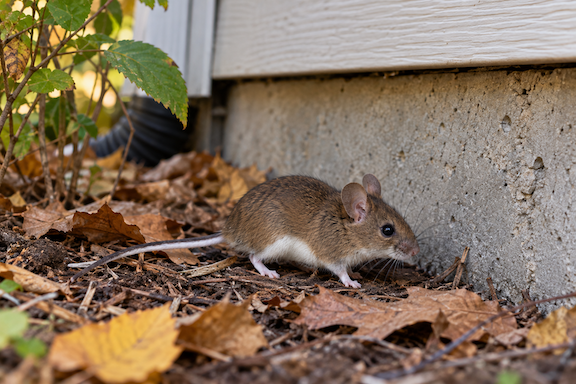
- A white belly and sharply contrasting brown-and-white coloring can suggest a white-footed or deer mouse; house mice are usually more uniformly gray-brown.
- The same prevention basics apply to both: seal entry points, reduce food and water sources, limit clutter, and respond to fresh signs of activity.
- Safe cleanup matters regardless of species. CDC advises against sweeping or vacuuming dry rodent droppings.
The old “country mouse versus city mouse” idea makes for a familiar story, but real mice do not follow municipal boundaries. A mouse in downtown Buffalo can be an outdoor-associated species, and a house mouse can live around a rural barn or farmhouse. For Western New York homeowners, the more useful distinction is between mice that are adapted to living in buildings and mice that normally live outdoors but move into structures when conditions favor it. Eco Serve’s mice control guide for Buffalo and Western New York explains the broader signs, entry points, and prevention strategies that apply when mouse activity shows up indoors.
Are “Country Mice” and “City Mice” Actually Different Species?
Not necessarily. The labels describe a setting more than a species. According to Cornell Integrated Pest Management, common pest rodents in New York include the house mouse, white-footed mouse, deer mouse, and Norway rat. Cornell notes that house mice can live outdoors when conditions are suitable, but they can also successfully live their entire lives indoors. White-footed mice and deer mice, by contrast, spend most of their time outdoors and may enter structures from fall through spring.
That means a simple rural-versus-urban label can be misleading. A better starting point is identification: what does the mouse look like, where was it found, and are there signs that it is nesting inside or repeatedly entering from outdoors?
| Common shorthand | “City mouse” | “Country mouse” |
|---|---|---|
| Species often associated with the label | House mouse (Mus musculus) | White-footed mouse (Peromyscus leucopus) or deer mouse (Peromyscus maniculatus) |
| Typical relationship with buildings | Highly adapted to human structures; may live and reproduce indoors year-round | Primarily outdoor mice that may enter buildings seasonally |
| Color pattern | Usually fairly uniform gray-brown above and below | Brown or reddish-brown back with a noticeably white belly and feet |
| What an indoor sighting may suggest | The mouse may be established indoors or using nearby indoor nesting sites | There is likely an exterior opening allowing outdoor mice to enter |
| Where either can occur | Urban, suburban, or rural properties | Urban-edge, suburban, rural, wooded, or landscaped properties |

The “City Mouse”: Why House Mice Do So Well Around Buildings
House mice are closely tied to human environments. In a home, apartment building, restaurant, warehouse, garage, or other structure, they can find steady access to shelter and small amounts of food. Cornell notes that house mice may nest indoors near food sources in dark, warm, undisturbed places such as under cabinets or near appliances. That is one reason mouse activity in Buffalo and Western New York can continue even after outdoor temperatures drop.
House mice are also not limited to cities. They can be found in suburban homes, farms, barns, sheds, and other rural buildings. The “city mouse” nickname is useful only because the species is so comfortable living alongside people.
The “Country Mouse”: White-Footed and Deer Mice Spend More Time Outdoors
White-footed mice and deer mice are more strongly associated with outdoor habitat. Cornell IPM describes both as mice that spend most of their time outdoors but enter structures from fall through spring. White-footed mice are common around wooded and brushy settings, but they can also occur near residential areas, field edges, stone walls, leaf litter, and landscaped properties. In other words, you do not need to live deep in the country to encounter one.
This distinction matters when you find one indoors. Cornell’s rodent management guidance notes that knowing the mouse species can help determine whether the animal is primarily living indoors, as house mice often do, or entering from exterior access points, as white-footed and deer mice commonly do. For the latter, an indoor capture is a strong reason to inspect the exterior carefully for openings.
How Can You Tell a House Mouse From a White-Footed Mouse?
A quick sighting is not always enough for a confident identification, especially when the mouse disappears behind a cabinet or into a wall. Still, several visible clues can help.
House mouse
Generally gray to brown with relatively uniform coloring from the back to the belly; the tail is semi-naked and roughly body length.
White-footed mouse
Typically brown or reddish-brown above with a clearly white underside and white feet; the tail is often darker above and lighter below.
Deer mouse
Also has a brown-and-white pattern and can look very similar to a white-footed mouse, making close identification difficult without a good view or expert assessment.
If all you have are droppings, noises, or gnaw marks, avoid assuming the species from one clue. Eco Serve’s frequently asked questions about mice and mouse identification and prevention guide can help you interpret common evidence, but a property inspection is often more useful when activity keeps returning.
Does Living in Buffalo Mean You Only Get “City Mice”?
No. Buffalo and the surrounding Western New York region include dense city blocks, older neighborhoods, suburban developments, parks, creek corridors, wooded lots, agricultural edges, and rural properties. Those habitats overlap. A home near mature trees, brush, vacant land, a park, or a wooded edge can encounter outdoor-associated mice even if the mailing address is urban or suburban.
Season matters too. Eco Serve’s guide to why mice and rats move indoors when temperatures drop explains that cooler nights and changing outdoor resources can increase pressure around buildings before winter fully arrives. For white-footed and deer mice, fall-through-spring entry is especially consistent with their outdoor lifestyle. For house mice already established inside, activity can continue year-round.
Where Should You Look for Mouse Entry Points?
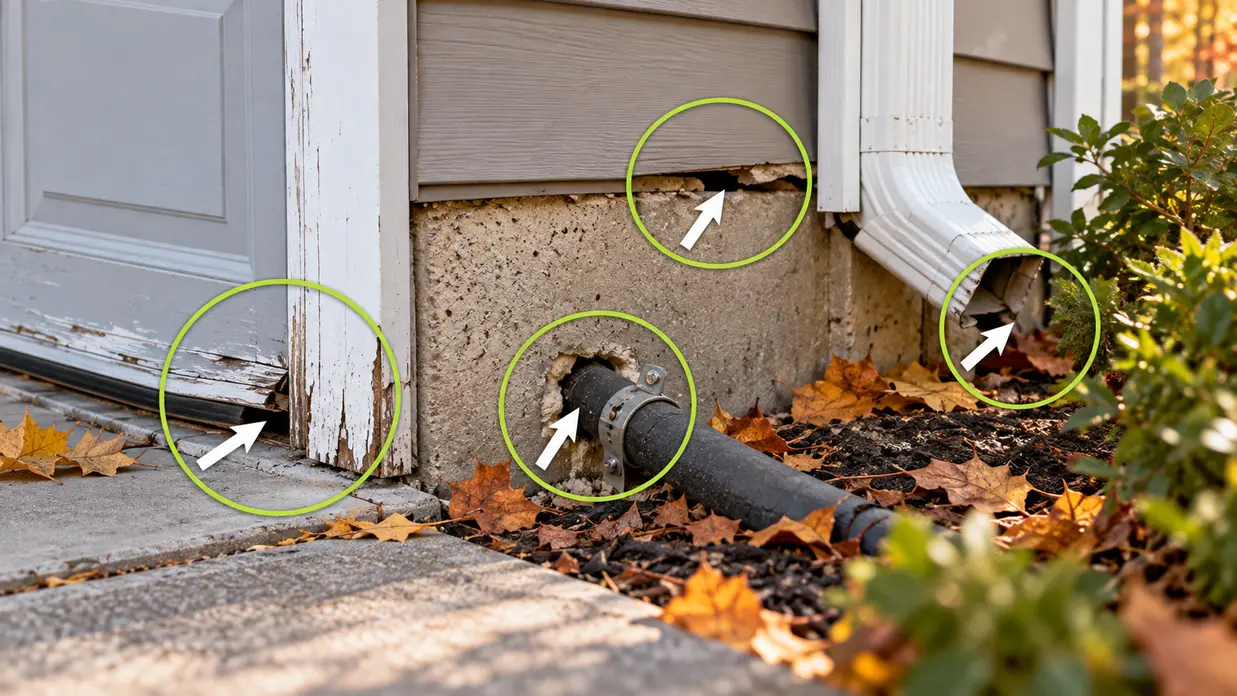
Regardless of which mouse you have, exclusion is one of the most important long-term steps. The CDC’s rodent exclusion guidance notes that mice can fit through an opening about 1/4 inch, roughly the width of a pencil. Check both low and high around the structure because mice can exploit small construction gaps and protected routes.
- Gaps around utility pipes, cables, conduits, and HVAC lines
- Worn door sweeps and garage-door corners
- Foundation cracks and gaps where siding or masonry materials meet
- Openings around basement windows, bulkheads, and crawl spaces
- Damaged vents, soffits, roofline transitions, and attic openings
- Areas where branches, vines, wires, or stored materials provide protected access toward the building
If you find fresh indoor evidence, consider the sequence before sealing every opening immediately. Eco Serve’s fall rodent prevention guide notes that closing an active route without addressing rodents already inside can trap them in the structure or redirect their movement.
Do “Country Mice” and “City Mice” Create Different Risks Indoors?
Any wild mouse indoors should be handled as a sanitation and property concern. The CDC advises that rodents can spread disease directly or indirectly and recommends reducing food, water, and shelter while sealing access points. You cannot tell whether a rodent carries a pathogen simply by looking at it.
Species can matter for specific disease ecology, but it is better not to turn a visual identification into a health diagnosis. White-footed mice, for example, are important hosts in the ecology of blacklegged ticks and Lyme disease. That does not mean every white-footed mouse carries infected ticks, or that seeing one indoors means someone has been exposed to Lyme disease. The practical response is to reduce rodent access and avoid direct contact with rodent waste.
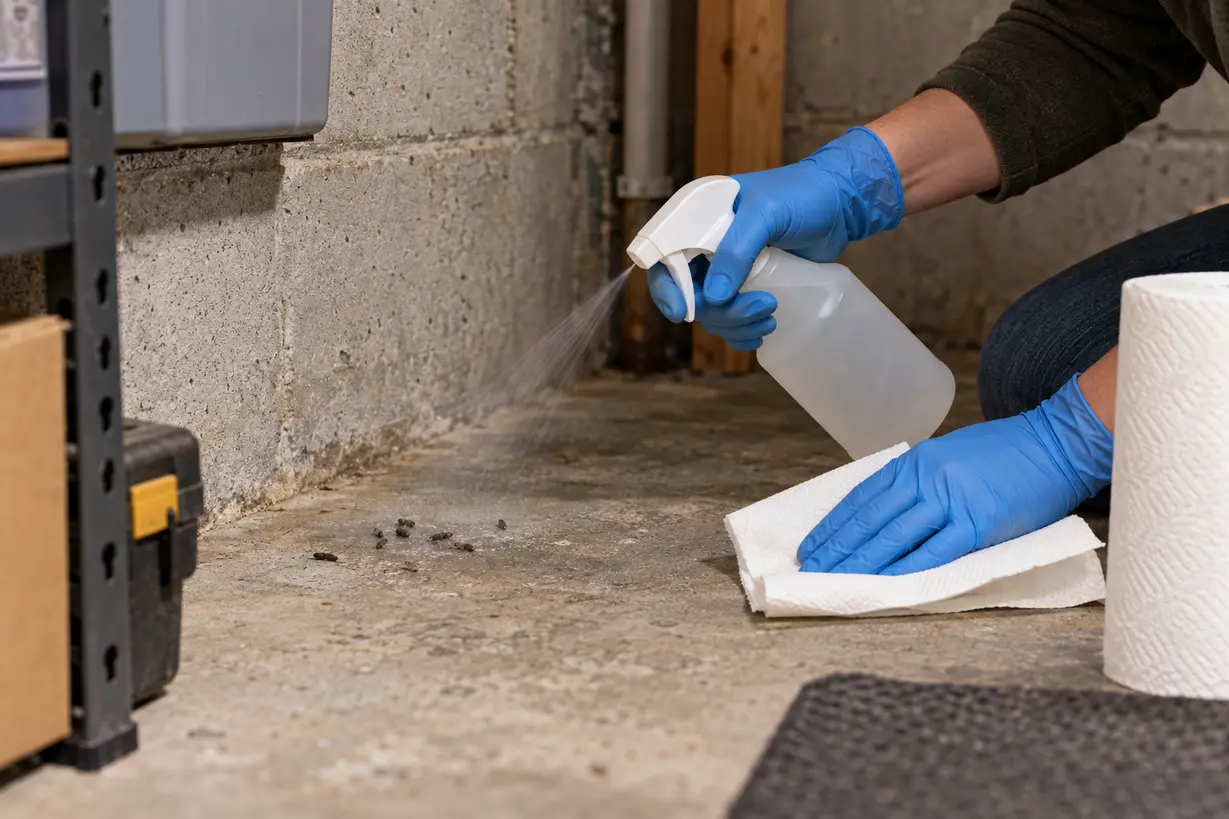
For cleanup, the CDC’s current rodent cleanup guidance says not to sweep or vacuum dry urine, droppings, or nesting material.
Wear rubber or plastic gloves, thoroughly wet contaminated material with an appropriate disinfectant, allow the required contact time, and wipe it up as directed. Heavy infestations require additional precautions.
How to Make Your Home Less Appealing to Either Type of Mouse
You do not need a different prevention plan for every mouse species. Identification helps explain where the pressure is coming from, but the strongest prevention strategy still combines exclusion, sanitation, storage, and monitoring.
- Seal accessible gaps with durable materials appropriate for the location.
- Repair worn door sweeps, vent screens, siding gaps, and damaged exterior materials.
- Store pantry goods, pet food, bird seed, and animal feed in sturdy containers with secure lids.
- Clean spills and crumbs, including hard-to-reach areas beneath appliances.
- Keep garbage secured and address leaks or other dependable water sources.
- Reduce cardboard, fabric, and clutter that can provide hidden nesting material or shelter.
- Trim dense vegetation and reduce protected travel routes immediately beside the foundation where practical.
- Continue monitoring after cleanup. New droppings or gnawing can indicate ongoing activity.
For a broader plan, see Eco Serve’s rodent control services in Western New York. A professional inspection can help determine whether the issue is an indoor house-mouse population, seasonal entry by outdoor mice, or a combination of conducive conditions and access points that needs a more complete plan.
Country or City, the Better Question Is: Where Is the Mouse Living?
The “country mouse versus city mouse” comparison is useful as a starting point, but it should not become the diagnosis. House mice are exceptionally comfortable around people and buildings, while white-footed and deer mice are more likely to originate outdoors and move into structures seasonally. Both can show up across Western New York, including in places that do not fit a neat rural-or-urban category.
If you are finding fresh droppings, hearing nighttime scratching, or seeing mice repeatedly, Eco Serve Pest Services can inspect the property, look for entry routes and conducive conditions, and recommend an approach based on what is actually happening at your home. Learn more about rodent control or contact Eco Serve to request a quote.
Frequently Asked Questions
Is a country mouse the same as a field mouse?
Not exactly. “Country mouse” and “field mouse” are informal terms that can refer to several outdoor-associated mice. In Western New York, a mouse described this way may be a white-footed mouse or deer mouse, but identification should be based on physical features and context rather than the nickname.
Is a city mouse always a house mouse?
No. House mice are strongly associated with human buildings, but outdoor-associated mice can also enter homes in urban or suburban areas, especially where wooded, brushy, or landscaped habitat is nearby.
Can house mice live outside?
Yes. Cornell IPM notes that house mice can live outdoors when conditions are suitable, even though they are also capable of living their entire lives indoors.
Why would a white-footed mouse come inside?
White-footed mice normally spend much of their time outdoors, but they may enter structures from fall through spring for protected shelter and access to resources. An indoor sighting can indicate an exterior opening that should be investigated.
Can I identify the mouse by its droppings alone?
Droppings can confirm rodent activity and sometimes provide size clues, but they are not always enough for a reliable species identification. Use several clues together, including appearance, location, nesting evidence, entry routes, and repeated activity.
What should I do if I find mouse droppings?
Avoid sweeping or vacuuming them while dry. Follow CDC cleanup guidance: wear gloves, thoroughly wet the material with an appropriate disinfectant, allow the required contact time, and wipe it up. Heavy infestations call for additional precautions.
When should I call a pest control professional?
Professional help is useful when mouse activity keeps returning, you cannot locate the entry route, evidence appears in wall voids or inaccessible spaces, or you need help distinguishing an indoor population from seasonal outdoor entry.